

“I’m literally screaming,” my friend tells me — except she’s not. I’ve just told her about my promotion at work. She raises her hands in front of her mouth as if to unleash a fearsome howl, but no sound comes out. She scrunches up her nose like a sneezing cat and lets out a hoarse cry. To the uninitiated, she may have seemed distressed — or in need of some urgent medical attention — but in Gen Z-code, I knew she was actually excited for me.
This is the Gen Z silent scream: the new behavioral motif used by the young to convey a muted kind of elation. The gesture has been picked apart endlessly online, with many filing it among a growing lexicon of supposedly baffling Gen Z-isms: the blank “Gen Z stare” when asked a question; the carefully calibrated “Gen Z pout”; the ongoing discourse around crew socks, baggy jeans, and an almost reflexive fluency in therapy-speak. Gen Z may come across as delulu (delusional), but this is a generation that knows how to use irony as its superpower.
Many of the chronically online among us may have discovered the silent scream in comedian Caroline Cianci’s viral skits about the “Gen Z girl with no personality,” which have amassed over 200 million views on social media. As this character, the Los Angeles-based comedian takes on a vapid persona, and delivers deadpan lines like: “It’s giving tea” (it’s gossip-worthy), “I’m feeling lowkey overstimmy,” (I’m overstimulated) and “That’s not…” (I don’t agree with you). She silently screams when the waiter arrives with her lunch (a “slay” green salad).
Cianci’s videos have viewers cringing at how unbearably — and accurately — she portrays a certain type of Gen Z woman. “This triggered my fight or flight mode,” commented one traumatized millennial underneath a recent post. “As an elder millennial, I watched this in silent anger,” wrote another. One person said Cianci’s archetype was “the worst person you know.” Another said what everyone else was thinking: “Gen Z just doesn’t know how to communicate…”
There’s no denying that there’s been a moral panic about how Gen Z — those born between 1997 and 2012 — are faring in society. It’s been catnip for the media, which tends to cast them as a generation of anxious, workshy overthinkers: more snowflake, even, than the millennials before them. They’ve come of age in an unstable era, had their formative social years disrupted by Covid, and are often said to be lacking basic interpersonal skills as a result. But does the silent scream really indicate an inability to communicate, or is it simply part of an evolving language that older generations cannot speak?
The origins of the silent scream are difficult to pinpoint exactly, but there is evidence of content creators pulling the motif as early as 2022. Adam Aleksic, a 25-year-old Harvard-educated linguist known online as the Etymolygy Nerd, tells me the gesture is “100 percent” derived from the semiotics of social media influencers, such as their overly accentuated claw-like hand movements. In his book, Algospeak: How Social Media is Transforming the Future of Language, Aleksic explores how internet algorithms are shaping language and communication in unprecedented ways — and he says today that the silent scream is one example of how slang has transmuted into body language without precedent. “Our gestures are behaving more like words,” he explains. “And as humans, we are mimetic, and we imitate other people.” Aleksic likens the silent scream to a pose used by a content creator in a YouTube thumbnail, which is a carefully selected picture used to capture a viewer’s attention mid-scroll. “I don’t think that’s a coincidence,” he says. “That motif resonates with the viewer in a way that interrupts scrolling patterns because it sparks an emotional connection.” Online, emotion is conveyed through shorthand. Offline, those same habits are starting to leak through.
The origins of the Gen Z vernacular go back much further. Much of the slang you see online, words like “period”, “slay” and “it’s giving,” have their roots in African American English (AAVE) and Black queer culture. The terms thriving today started in Black subcultures, beginning when letters are dropped from certain words, or entire phrases are combined to form new expressions, and it has been melded together to form a globally understood language. Call it the TikTok dialect. Understanding what it really means is on an if you know, you know basis.
While slang has long existed in gesture form — think of the now omnipresent fist bump or the OK hand signal — Gen Z has a much bigger arsenal. There’s the finger heart (crossing the thumb and index finger to form a small heart shape), or the hair tuck (pushing real or imaginary hair behind your ear to convey a flirty or arrogant tone), and the “clock it” move (tapping the thumb, middle and index fingers in a sassy way, to indicate you’ve noticed a hidden truth) — all of which have become daily reference points for the young. It’s a lowkey flex. Aura points certified.

Gen Z slang and symbols have become a form of small talk for the generation, in the same way that talking about the weather passes the time and acts as a social lubricant. Sam Cummins, 29, host of the pop culture podcast Nymphet Alumni and zeitgeist whisperer, believes semiotics like the silent scream have become a social crutch. She remembers a recent conversation she had with a TikTokker, where words like “period” or “it’s giving” were used generously — and she found it hard to keep up with the terminology. “I made some superficial, kind of nothing comment, like, ‘Your outfit is giving Carolyn Bassette Kennedy,” she laughs. “You have to do the mental gymnastics of drawing upon this trove of internet information and remembering specific trends or buzzwords that are appropriate for that type of conversation… it can be a challenge.”
It’s giving… lack of social skills? The moral panic surrounding Gen Z’s apparent social ineptness is justified: members of the cohort are spending far fewer in-person hours hanging out with friends compared to young people 20 years ago, according to the The American Enterprise Institute’s Survey Center on American Life, while further research has shown that today’s teens and young adults are far less likely to go to parties, go out with friends or date.
Cummins thinks that Gen Z are overly conscious of their reputation, which only makes them more anxious about expressing themselves in conversation. “Gen Z is very aware of the fact that people think they’re bad at interacting socially, and they are really nervous about socializing,” she says. “So adopting all of these different behaviors and gestures is a means for really shy and socially awkward people to almost perform extroversion to beat the allegations that they are all introverted.”
It could also be a coping mechanism. Experts studying the generation have observed how irony and internet-speak are often used to obfuscate meaning and avoid emotional sincerity altogether. Kelsey Weekman, a senior entertainment reporter at Yahoo News and author of the Gen Z culture newsletter “okay zoomer”, has studied how the generation often hides behind irony to avoid communicating how they’re really feeling.
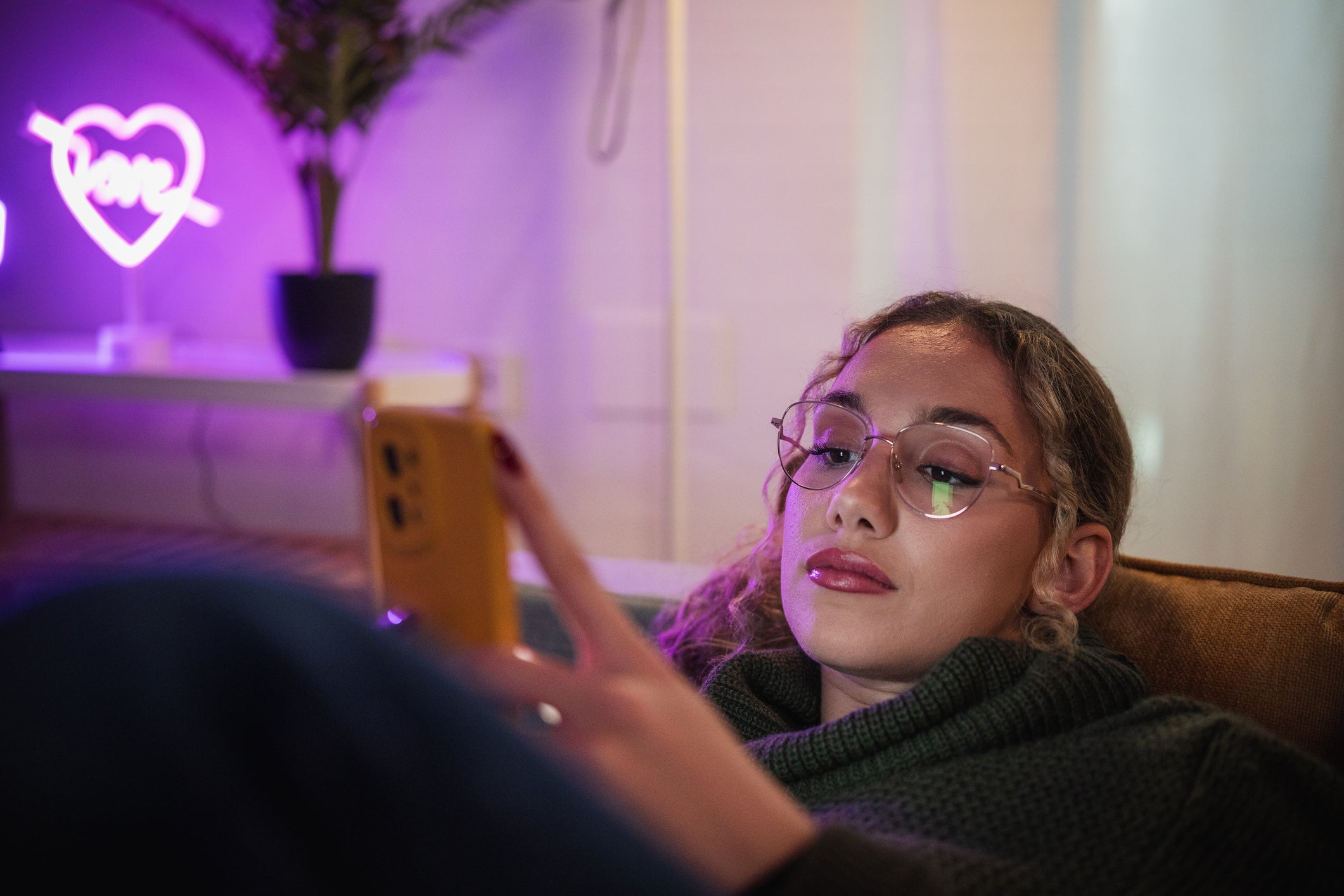
“With physical slang, we don’t necessarily have to verbalize all that we’re feeling, because that opens us up to rejection, failure and judgment and all those other things associated with being cringe,” she says. “Doing things ironically, like a very dramatic hand signal, protects you from having to have that feeling of vulnerability.” A person might do something in an unserious, over-the-top manner because they “don’t have to really dig into that emotion.”
As a member of Gen Z himself, Aleksic would never judge a peer of his for using the silent scream. Instead, he might remark that they are “brain-rotting,” a joke that draws attention to how a person’s behavior has been influenced by internet trends and algorithms. If someone’s idiolect is littered with Gen Z slang, it might suggest they lack originality, but it also shows their human desire to be accepted by others.
Aleksic says this is only natural. “We too often tend to scrutinize people, especially young female influencers for their behaviors, in a way that does not address the deeper ways that social media is affecting us,” he says. “It’s a knee-jerk reaction that there is negative scrutiny of it, but it doesn’t mean that it’s inherently bad to do that gesture. Like brain rot — is this actually bad for your brain? No… it’s just somebody doing something because other people do it.”
When I asked my friend — who, I should add, has a screen time of more than 10 hours a day — why she adopted the silent scream, she says it feels like a natural impulse. “It’s like a cute form of excitement,” she tells me. “I was genuinely really happy about your news…. And it was easier than saying ‘Congratulations’ or ‘well done’…. maybe that’s me being lazy?” Her silent scream might be rage-bait for some, but I knew she was happy for me, even if it took me a hot minute to clock it.