

Last Updated:
Kargil Vijay Diwas 2026: Twenty-seven years after Operation Vijay, here’s how the Kargil War transformed India’s military through reforms, modernisation and Atmanirbhar Bharat.




Kargil War reshaped India’s defence strategy, leading to military reforms, modernisation and a renewed focus on Atmanirbhar Bharat in the decades that followed.
Kargil Vijay Diwas 2026: The Kargil War of 1999 was more than a battlefield victory. It marked a turning point in India’s defence journey, exposing critical operational challenges while reaffirming the courage, professionalism and resolve of the Armed Forces.
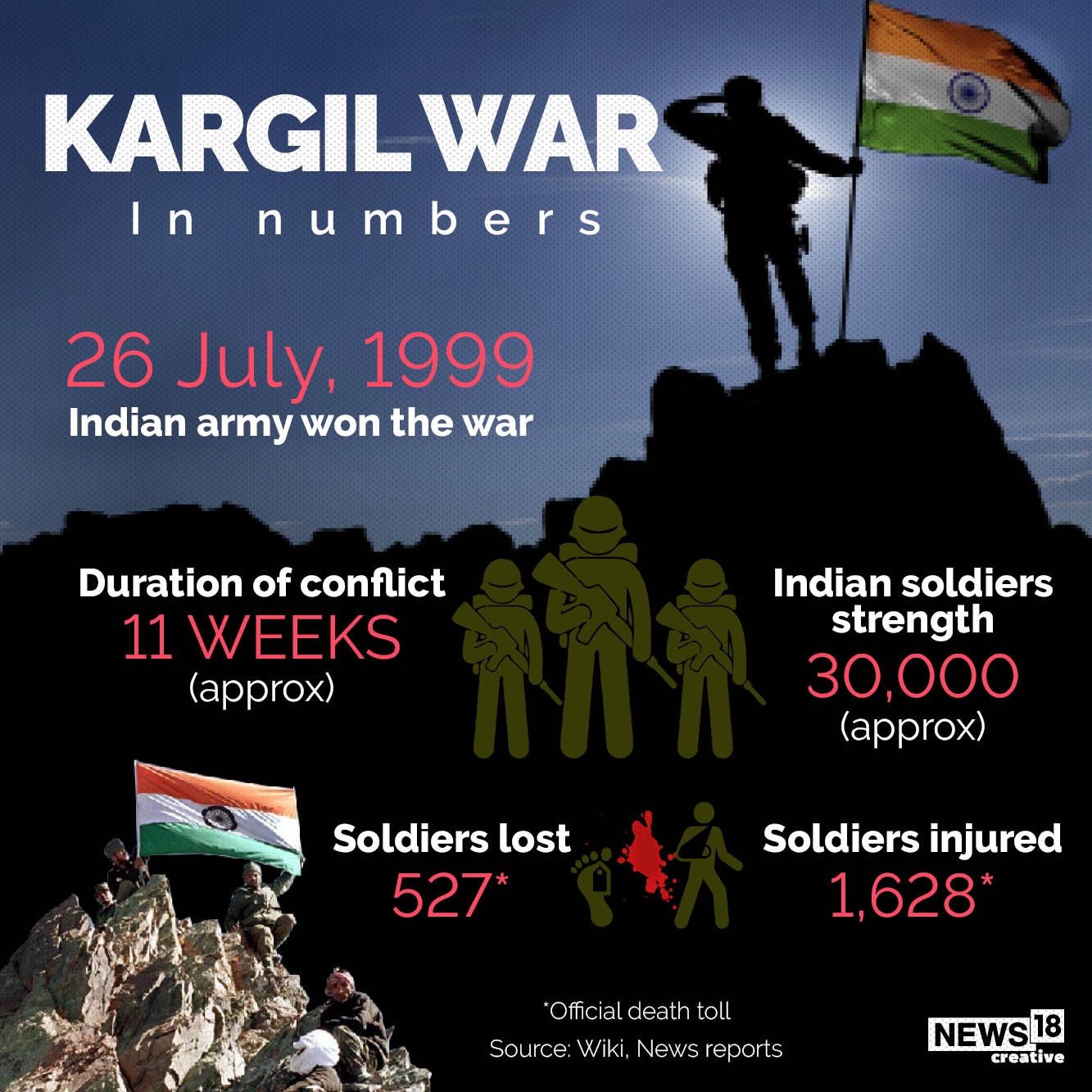
India’s success in Operation Vijay came at a heavy cost, with 527 soldiers laying down their lives to reclaim every occupied post without crossing the Line of Control (LoC). The conflict underscored the importance of stronger military coordination, modern equipment, better intelligence and self-reliance in defence production.
Twenty-seven years later, the legacy of Kargil continues to influence India’s military doctrine, defence reforms and strategic preparedness.
Why Kargil Became a Turning Point
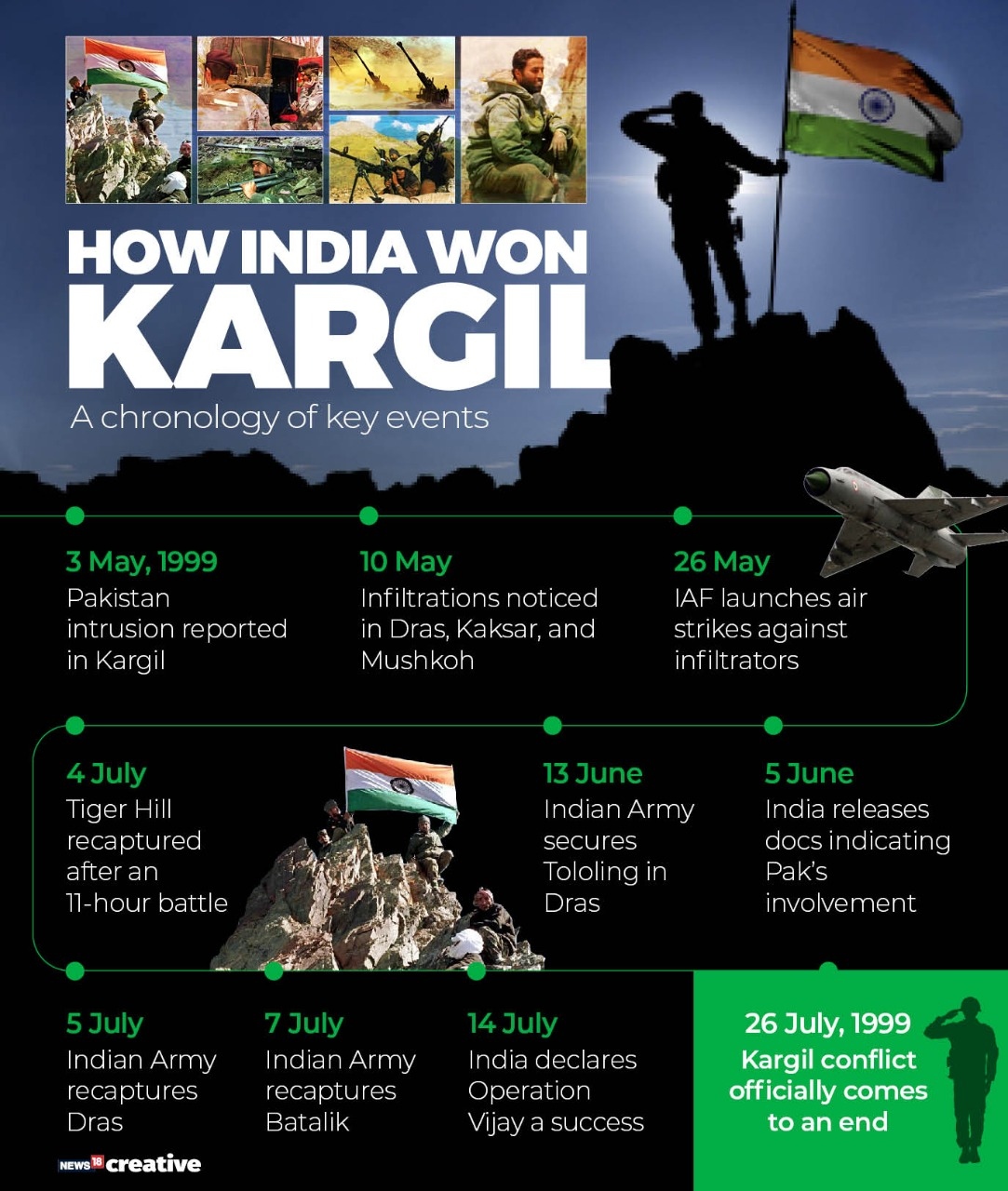
The conflict began in May 1999 when Pakistani forces, under Operation Badr, infiltrated across the Line of Control and occupied winter-vacated Indian positions on dominating heights in the Dras, Batalik, Mushkoh and Kaksar sectors.
Their objective was to disrupt the Srinagar-Leh highway, isolate Indian positions in Ladakh and increase pressure on India over Kashmir.
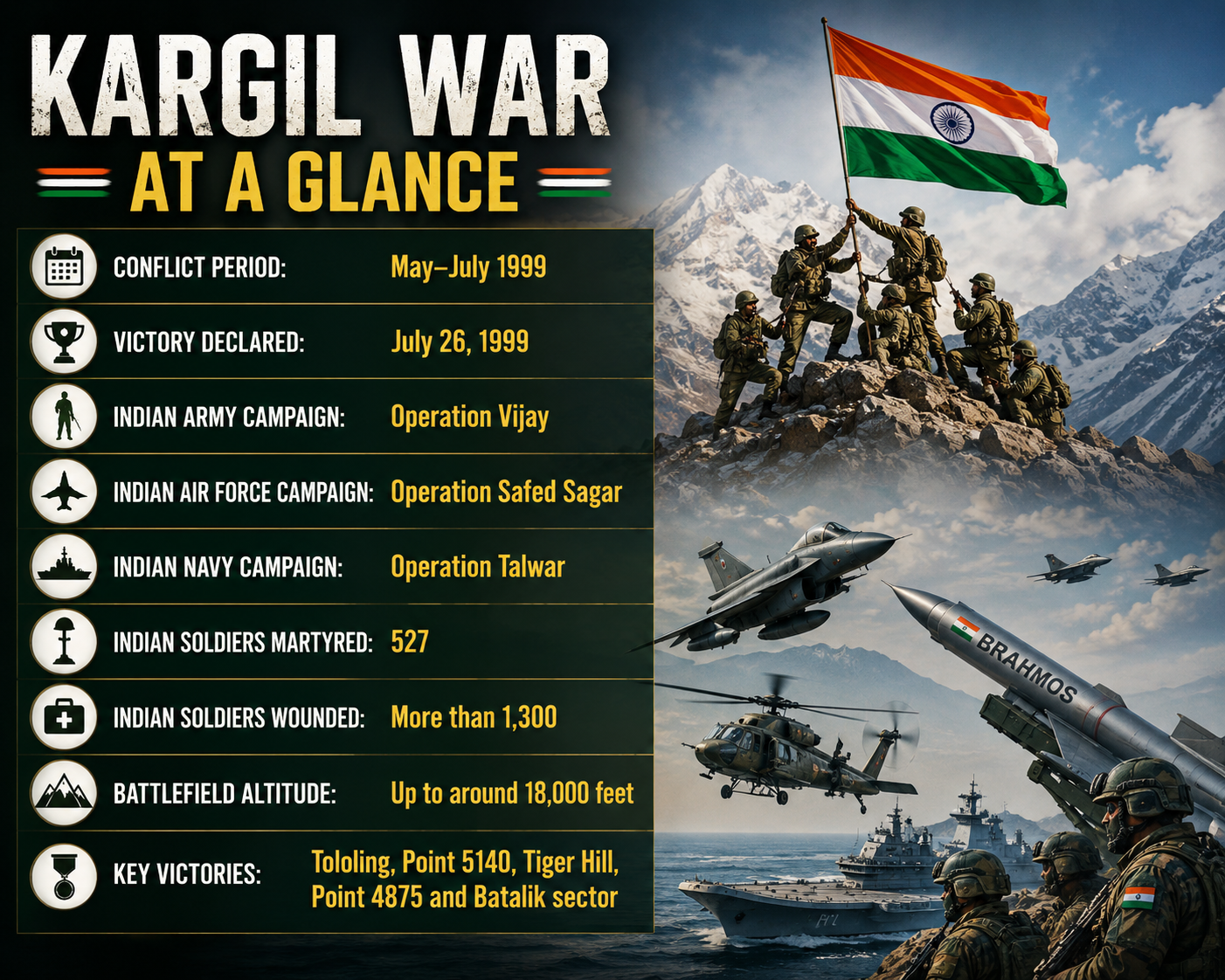
India responded through Operation Vijay, supported by the Indian Air Force’s Operation Safed Sagar and the Indian Navy’s Operation Talwar. Despite intense fighting at altitudes exceeding 16,000 feet, India successfully recaptured every occupied position without crossing the Line of Control, earning international respect for its military restraint and professionalism.
The war also exposed gaps in intelligence gathering, surveillance, logistics and coordination among the three Services, lessons that would shape India’s defence policies for decades.
1. Stronger Coordination Between the Army, Navy and Air Force
One of the biggest lessons from Kargil was the need for greater integration among the three Services.
Although the Army, Air Force and Navy worked together effectively during the conflict, policymakers recognised that future wars would demand even closer coordination.
This eventually led to landmark reforms, including:
- Creation of the Chief of Defence Staff (CDS) in 2020.
- Establishment of the Department of Military Affairs (DMA) to improve joint planning and operations.
- Greater emphasis on integrated military doctrines and theatre commands.
2. Faster Military Modernisation
The conflict highlighted the need for precision weapons, better surveillance and faster decision-making.
Over the years, India has inducted several advanced military platforms, including:
- Rafale fighter aircraft
- Apache attack helicopters
- Chinook heavy-lift helicopters
- Arjun Mk IA battle tanks
- INS Vikrant, India’s first indigenous aircraft carrier
- Advanced drones and surveillance systems
These platforms have significantly enhanced India’s operational capability across land, air and sea.
3. The Push for Atmanirbhar Defence
The Kargil War reinforced the importance of reducing dependence on imported military equipment.
Over the years, the government expanded indigenous defence manufacturing through initiatives such as Make in India and Aatmanirbhar Bharat, encouraging greater participation by public sector units, private companies, MSMEs and start-ups.
According to the Ministry of Defence, India’s defence production reached a record ₹1.78 lakh crore in 2025-26, while defence exports rose to ₹38,424 crore, with Indian-made equipment now exported to more than 80 countries.
4. Better Intelligence and Border Surveillance
One of the key operational lessons from Kargil was the importance of constant monitoring of border areas.
Today, India’s surveillance network includes:
- Drones and unmanned aerial systems
- Satellite-based monitoring
- Advanced radar systems
- Integrated intelligence sharing
- Real-time reconnaissance technologies
These capabilities have significantly improved situational awareness along the Line of Control and other sensitive frontiers.
5. Stronger High-Altitude Warfare Capability
Kargil demonstrated that future conflicts could be fought in some of the world’s harshest environments.
Since then, India has invested in:
- Specialised mountain warfare training
- Better winter clothing and equipment
- Improved logistics
- Border roads and strategic tunnels
- Faster mobilisation of troops
These investments have strengthened India’s readiness in Ladakh and other Himalayan regions.
6. Indigenous Technology and Future Warfare
The nature of warfare has evolved dramatically since 1999.
Today, India’s Armed Forces increasingly rely on:
- Drone warfare
- Precision-guided weapons
- BrahMos supersonic cruise missiles
- Electronic warfare systems
- Artificial intelligence-enabled surveillance
- Network-centric military operations
Technology has become a key force multiplier alongside manpower.
7. A Stronger Defence Industrial Base
The lessons of Kargil also accelerated reforms in defence manufacturing.
Key initiatives include:
- Defence Industrial Corridors in Uttar Pradesh and Tamil Nadu
- Positive Indigenisation Lists
- Srijan Defence Portal
- Greater participation of MSMEs and start-ups
- Higher foreign investment in defence manufacturing
These measures are aimed at strengthening India’s self-reliance while creating a robust domestic defence ecosystem, said a PIB release.
Kargil’s Legacy Lives On
Every year on July 26, India observes Kargil Vijay Diwas to honour the courage and sacrifice of the Bravehearts of Operation Vijay.
The victory not only safeguarded India’s sovereignty but also became a catalyst for military reforms that continue to shape the country’s defence strategy.
Today, India’s Armed Forces are more integrated, technologically advanced and increasingly self-reliant than they were in 1999. The lessons of Kargil continue to influence military planning, modernisation and preparedness, ensuring that the sacrifices made on the icy heights of Ladakh continue to strengthen the nation’s security.
Source: PIB
About the Author

Nibandh Vinod is a seasoned journalist with nearly three decades of experience. He specialises in covering events and festivals and in driving SEO-focused content for News18.com. Tech-savvy and collab…Read More