

Last Updated:
Research shows that sleeping too little and too much sleep is linked with numerous chronic diseases. Addressing sleep issues may improve metabolic health and diabetes outcomes.

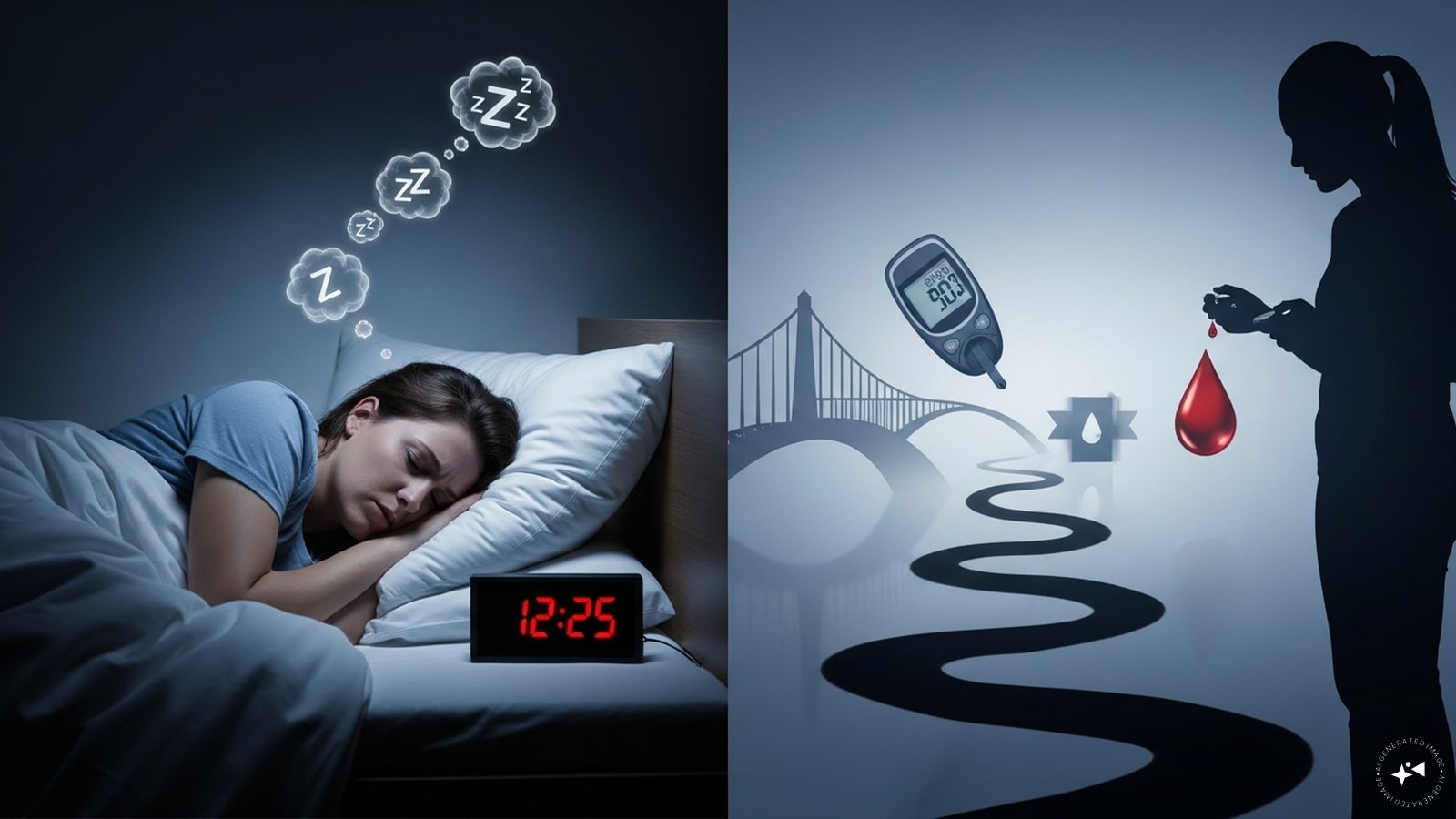
Think You Function Fine On 6 Hours Of Sleep? Your Pancreas Disagrees, Says Recent Research (Image-AI)
In today’s hustle culture, burnout is worn like an achievement, and rest feels like a luxury. Many claim that they “get by” on five or six hours of sleep. They sip coffee like a life source, and reassure themselves that catching up on weekends is good enough. But studies warn that poor sleep “could be” silently driving the global rise of Type 2 diabetes.
Behind an illusion of productivity is a silent disruption; the eyelids may stay open, and tasks may still get done, but the inner body begins to falter. Sleep, a ‘supposedly negotiable’ part of people’s routine, turns out to be a pillar supporting nearly every aspect of human health.
Studies have increasingly shown that sleeping for less than six hours for months could enormously affect a person’s metabolism, appetite, memory, emotional health and hormones. Its direct link is also being seen with Type 2 diabetes — the fastest-growing chronic condition in the world.
Studies also warn that people who routinely sleep for less than six hours a night may be twice as likely to develop prediabetes or type 2 diabetes as compared to those who sleep the recommended seven to eight hours. This is not just speculation from new-age wellness trends – it is the studies and science rooted in decades of clinical research.
But it is not only the sleep-deprived who are at risk. Major studies also point out that adults who routinely sleep more than nine hours a night may also face increased chances of developing chronic diseases like obesity, stroke, heart disease, headache and back pain.
Oversleeping has been associated with metabolic dysfunction, inflammation, and poor glucose tolerance — suggesting that both extremes, too little and too much sleep, may disrupt the body’s internal balance.
For healthy adults, most experts recommend seven or more hours of sleep per night. Falling below that triggers metabolic shifts that are visible in the bloodstream long before the symptoms appear. Sleeping six hours or less does not just make you tired, but it changes how your body stores fat, processes glucose, and responds to insulin.
The obvious question then arises: What exactly happens inside the body when we consistently sleep less than six hours?
Domino Effect Of Too Little Sleep
When the body is deprived of sleep, it does not perform worse, but it starts behaving differently. Hormones that control appetite and satiety shift tremendously, setting the stage for increased hunger, especially cravings for sugar and processed food. Leptin – the hormone that signals fullness — drops, while ghrelin — the hormone that triggers hunger — rises. Stress hormones like cortisol increase, which in turn affects insulin sensitivity.
According to the study published by the Sleep Foundation Organisation in July 2025, “sleep deprivation raises levels of ghrelin, the hunger hormone, and decreases levels of leptin, the hormone that makes us feel full,” which fuels cravings and weight gain — two of the biggest drivers of Type 2 diabetes.
As per the review from a 2006 National Library of Medicine, lack of sleep alters this hormonal balance in ways that directly raise diabetes and obesity risk, concluding that “the long-term effects of sleep loss and sleep disorders are linked to diabetes, hypertension, heart attack, obesity and stroke.
Evidence From Another Landmark Research
According to the systematic review published by PubMed Central in 2023 titled ‘The Link Between Sleeping and Type 2 Diabetes’, the researchers screened 11 studies to examine the association between sleep and diabetes. The authors found strong evidence that insufficient or poor quality sleep affects insulin resistance, metabolic outcomes and glucose regulation in adults or at risk of type 2 diabetes.
The review states:
- “Short sleepers had greater levels of fasting insulin, fasting glucose, and insulin resistance.”
- “Sleep problems may play a role in metabolic abnormalities as risk factors.”
The review also concludes that sleep disorders like obstructive sleep apnea are not just symptoms in people with diabetes – they are predictors and contributors to metabolic dysfunction. This also means that even before diabetes develops, the body is already producing signals of distress in response to inadequate sleep.
How Diabetes Affects Sleep
Researchers stress that sleep and diabetes have a bidirectional relationship. Poor sleep increases the risk of diabetes – but diabetes also disrupts sleep. High or fluctuating night-time blood sugar can trigger thirst, night-time urination, restlessness and sweating – all of which worsen sleep patterns. That cycle is a part of what makes early sleep intervention so important in diabetes prevention and management.
The Sleep Foundation reports that “one in two people with type 2 diabetes have sleep problems due to unstable blood sugar levels,” including night-time urination, headaches, fatigue, and night-time blood sugar swings.
Role Of Circadian Rhythm
Sleep is not just about rest – it is about timing. The circadian rhythm governs how the body processes glucose. Irregular sleep patterns, night shifts or sleeping at inconsistent hours can disrupt this internal clock, leading to impaired metabolic responses even when total sleep time is adequate.
The 2023 systematic review emphasised circadian rhythm disruption as a major factor in insulin resistance and glucose tolerance – especially among workers or those who regularly sleep at erratic hours.
Underestimating The Sleep Cycle
People know that sleep is important, but few realise that it affects long-term disease risk. The connection between sleep and diabetes is as robust as the link between smoking and lung cancer – yet sleep deprivation remains socially acceptable.
The 2006 National Library of Medicine made this point nearly twenty years ago, warning that “sleep loss and sleep disorders are among the most common yet frequently overlooked and readily treatable health problems,” and that they “carry grave public health consequences.”
What Is The Minimum Sleep Requirement?
- 7+ hours is ideal for most adults
- Under 6 hours increases health risks significantly
- Long sleep (>9 hours) can also correlate with poor health, but often because of underlying illness
For diabetes prevention and metabolic health, 7-8 hours of consistent sleep is the key.
Why This Matters Now
Type 2 diabetes is no longer a middle-aged disease. The condition is rising significantly in teens and young adults, and sleep deprivation is rising right alongside it. The habits we shrug off in our 20s and 30s are catching up faster than ever. Diabetes is a slow-build disease, and sleep may be one of the earliest warning signs and one of the simplest interventions, yet it remains the most overlooked.

What Happens If You Oversleep?
While sleepless nights and their impact on health have become a major topic and landmark studies also link it with chronic conditions like diabetes, it is important to pay attention to the opposite extreme, too. Oversleeping, often ignored and seen as harmless, may signal deeper health issues.
New research shows that regularly sleeping more than nine hours a night may carry its own set of health risks. Oversleeping does not make anyone unhealthy automatically, but it is often a signal that something else may be going on, too. If a person regularly needs 9+ hours of sleep and still feels tired, then it can impact how their body and brain function.
How Much Sleep Is “Too Much?”
The studies suggest that most adults function with 7-9 hours of sleep without any tiredness; both short sleep (less than 6 hours) and long sleep (more than 9 hours) are linked to health issues.
According to the PubMed Central research published in March 2025, “A meta-analysis tracking over 2.1 million people found that: People who are sleeping under 7 hours faced a 14% higher mortality risk, while those sleeping 9 or more hours had a 34% higher mortality risk.”
Health Risks Of “Too Much Sleep”
According to a study published by Sleep Foundation in July 2025, “Oversleeping impacts your overall health and can have negative effects, just as a lack of sleep does. Early research suggests that longer sleep:
- Worsens inflammation in the body
- Decreases your immune function
- Can lead to chronic diseases
How Does Oversleeping Affect The Body And Brain?
Oversleeping, also referred to as sleeping more than nine hours in 24 hours, is more than just extra rest. According to SleepFoundation.org’s July 2025 report Oversleeping: How Much Sleep Is Too Much?, long sleepers often experience poorer sleep quality and lingering fatigue despite longer hours.
Obesity– Oversleeping has been linked to a higher risk of obesity, partly because disrupted sleep affects appetite-regulating hormones like leptin and ghrelin. Long sleepers often experience poor sleep quality and insulin irregularities, which interfere with metabolism and increase hunger, resulting in weight gain and fat storage.
Heart Disease– The Sleep Foundation study also indicates that oversleeping is associated with cardiovascular strain, including stiffer arteries, cardiometabolic syndrome and a greater risk of heart disease or stroke. Chronic inflammation — often seen in long sleepers — may play a key role in damaging heart health over time.
Stroke– Research mentioned in the Sleep Foundation’s report found that sleeping more than nine hours, especially when combined with long naps, increases stroke risk. Poor sleep quality, inflammation, and underlying sleep disorders may magnify the risk, raising stroke odds by up to 56% in some cases.
Back pain– Oversleeping or extended time in bed can cause muscle stiffness, inflammation, joint pressure, particularly in people suffering from spinal issues or arthritis. Poor sleep posture and prolonged inactivity reduce circulation, often leaving oversleepers with increased back pain
Headaches– Oversleeping can trigger tension headaches or migraines by altering serotonin levels and disrupting the body’s natural sleep-wake rhythm. Scientists believe oversleeping can disrupt a person’s circadian rhythm and impact levels of serotonin, a neurotransmitter that plays a role in sleep regulation and pain perception.
Why Does Oversleeping Happen?
- Oversleeping is a symptom, not the cause. Some of the common triggers include: Underlying illness, depression, heart disease, diabetes, chronic pain and medication side effects
- Poor sleep quality- You might spend 10 hours in bed, but get very little restorative sleep due to sleep apnea or frequent disruptions.
- Lifestyle factors- Irregular sleep schedules, low activity levels, daytime naps, and poor routines can disrupt your natural body clock.
Why Oversleeping Deserves More Attention
While sleep deprivation is a widespread problem but oversleeping is a chronic condition which is usually overlooked. Research states that sleeping too much can be just as risky as sleeping too little, especially when paired with fatigue, low mood, weight gain, or pain. As stated by SleepFoundation.org, “Sleep is not just about surviving. It’s about thriving — and the right amount matters.”
A body that is not getting enough sleep and rest cannot control appetite, no matter how strong the caffeine or how motivated the mind is. Research and studies across decades have shown that sleep is as crucial to metabolic health as diet and exercise. Sleeping six hours or less is not a harmless habit, but it increases risk factors of chronic diseases and sleeping for more than 9 hours carries its own set of risks.
November 17, 2025, 15:32 IST