

Last Updated:
The research unfolded slowly and methodically. Over five months, the students collected fifteen widely consumed street foods from one of Bengaluru’s best-known food streets.

Some were deep fried at extremely high temperatures. Others had high sugar content. A few were cooked using relatively lower temperatures or moist heat. Each variable mattered. (Image: AI generated)
A vendor lifts nippattus from a bubbling kadai, shakes off excess oil, and stacks them neatly. A few steps away, butter melts into pav bhaji, thick and loud, scraping against a large pan. There is steam, smoke, and the familiar comfort of watching food being made right in front of you. On Bengaluru’s food streets, the hour is marked not by clocks but by queues.
Most people come here knowing exactly what they are giving in to. It is oily. It is indulgent. It is not everyday food. But it is also routine – quick, affordable, emotional. You eat, you wipe your hands, you move on. Whatever happens inside the food feels distant, invisible, negotiable.
On one such street, however, the food was being looked at differently. Not tasted, not photographed, not inhaled. It was being collected, labelled, sealed, and taken away.
This was not consumer activism or a health raid. It was the beginning of a research process led by people rarely associated with serious scientific inquiry – school students trained to ask precise questions, control variables, and wait for evidence before drawing conclusions.
What followed over the next five months would quietly challenge not just how street food is prepared, but also long-held assumptions about where research begins and who gets to do it.
Where Research Usually Isn’t Expected
In popular imagination, research belongs to senior scientists, doctoral candidates, and specialised laboratories. It is associated with white coats, years of training, and distance from everyday life. Street food, by contrast, belongs to noise, habit, speed, and compromise.
This project sat uncomfortably between the two worlds.
Through the Anveshana program run by the Prayoga Institute of Education Research, a team of high school students took on a question rooted firmly in public health and food chemistry: what chemical compounds form in common foods when they are cooked at high temperatures, and what might sustained exposure mean for people who consume them regularly?
Their focus was acrylamide, a toxic compound that forms naturally in carbohydrate-rich foods during high-temperature cooking processes such as deep frying, roasting, and baking.
Acrylamide is not a fringe concern. It has been discussed in scientific literature for years, though rarely in connection with food people consider ordinary and harmless.
From Familiar Snacks to Controlled Samples
The research unfolded slowly and methodically. Over five months, the students collected fifteen widely consumed street foods from one of Bengaluru’s best-known food streets. The selection was deliberate.
Items such as nippattu, kodbale, french fries, pav bhaji, tandoori tikkas, roasted corn, and traditional sweets like kajjaya were chosen not for popularity alone, but for the way they are prepared.
Some were deep fried at extremely high temperatures. Others had high sugar content. A few were cooked using relatively lower temperatures or moist heat. Each variable mattered.
Once collected, the food stopped being food. It became data.
Samples were carefully labelled and transported to the laboratory, where they were processed under controlled conditions. There were no shortcuts. Each step was documented. Each analysis was repeated. Assumptions were discouraged.
For the students, this was an introduction to the discipline of real research where waiting is as important as discovery, and certainty comes slowly, if at all.
Learning How Science Actually Works
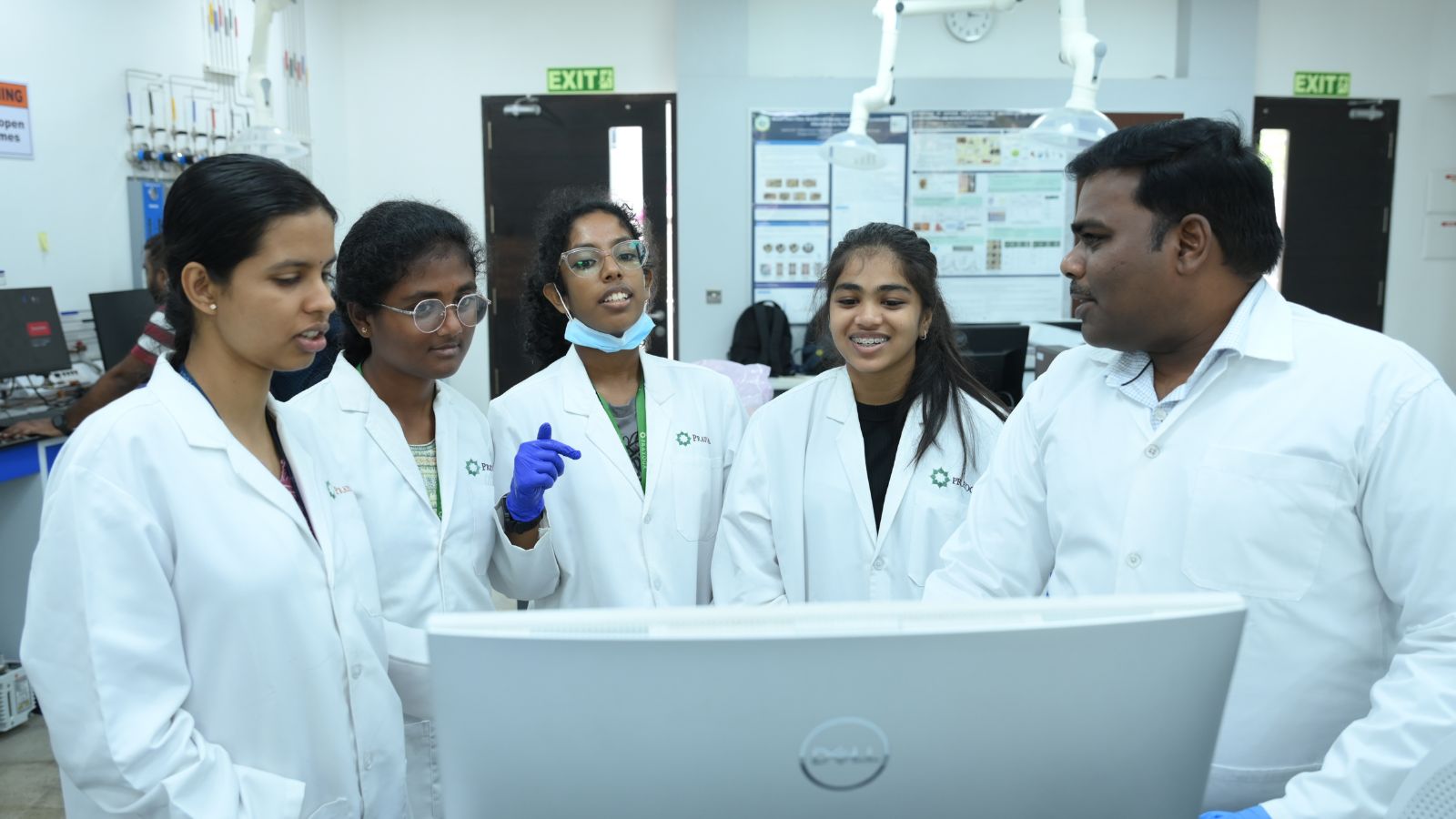
Under the mentorship of senior researcher Dr Athavan Anand and research associate Asha C H, the students were trained not just to follow procedures but to understand why those procedures existed. They learned how to frame research questions tightly enough to test. They learned how not to bend results to expectation.
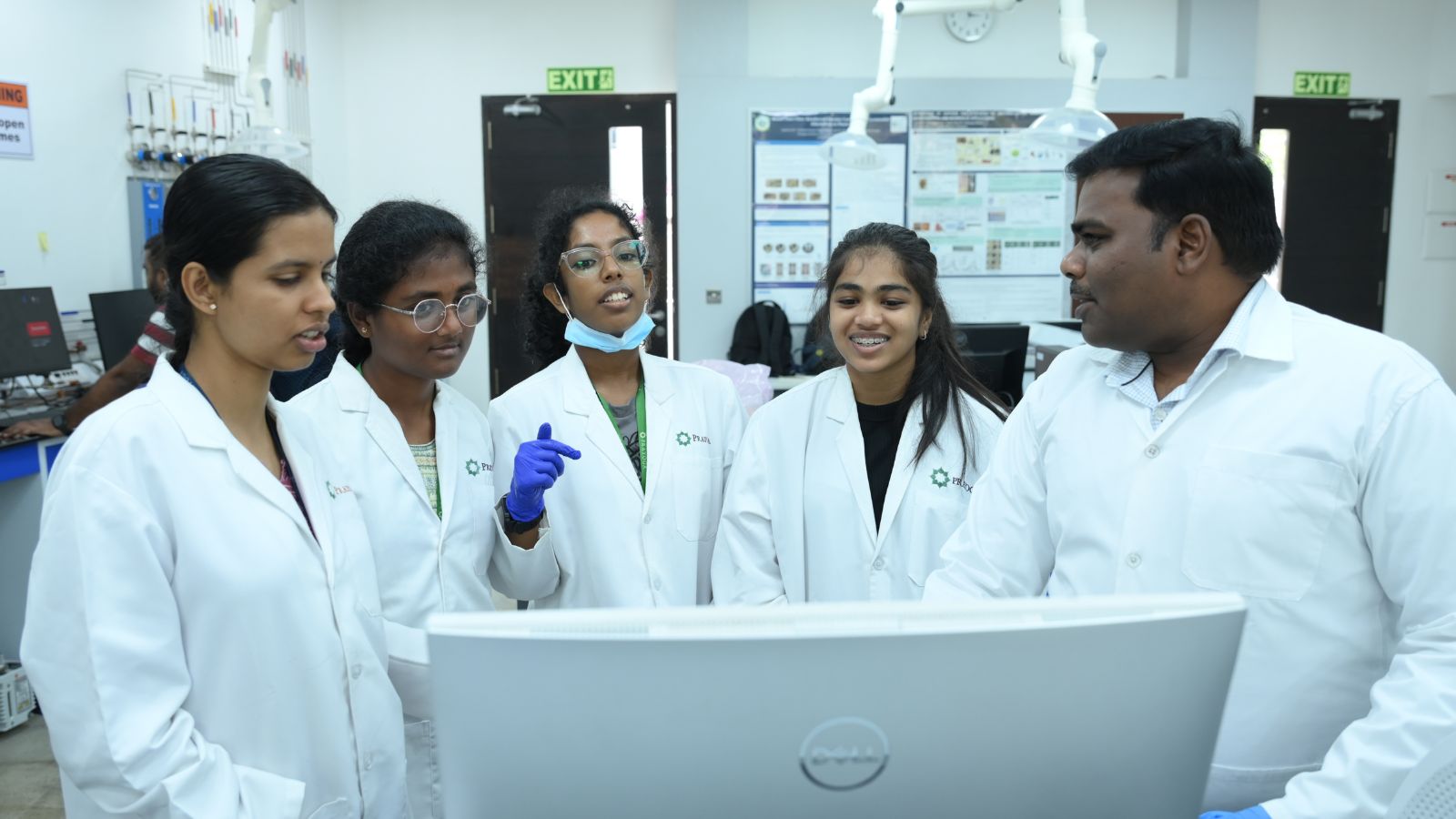
The analytical method used was dispersive liquid-liquid microextraction followed by gas chromatography–mass spectrometry, a highly sensitive technique used in professional laboratories to identify trace chemical compounds. It is a tool designed to eliminate guesswork.
Understanding the equipment, however, was only part of the training. Equal emphasis was placed on analytical thinking, consistency, and restraint, allowing data to speak without anticipation.
When Patterns Began to Appear
As results came in, patterns emerged. Foods cooked through deep frying at temperatures exceeding 180 degree Celsius consistently showed the presence of acrylamide.
Items with high sugar content also tested positive. In contrast, foods prepared using steaming or other moist-heat methods showed negligible traces.
Acrylamide has been classified as a probable carcinogen by the International Agency for Research on Cancer. While human studies are still evolving, animal studies and international health agencies have linked long-term exposure to potential cancer risks along with neurological and reproductive effects.
The students did not frame these findings with alarm. They documented them with care. The study does not argue against street food consumption. Instead, it highlights how cumulative exposure and cooking practices matter far more than occasional indulgence.
Research Without Hierarchies
One of the quieter strengths of the project lay in its composition. Among the student researchers was Pranathi G S, an eighth-grade student from a Navodaya school in rural Srinivasapura, Kolar district. She had not yet studied chemistry formally.
“I was unsure initially,” she says. “I thought others would know more. But the mentors made sure everyone understood the process step by step.”
She was not given simplified tasks. She was trained thoroughly.
Ninth graders Glory Prakash from Moodbidri and Sarah Mariam Vino from Chalakudy, Kerala, echoed this experience. Beyond technique, Vino says the biggest lesson was patience. “I realised how much time even simple research needs, and how important it is not to rush conclusions.”
What the Work Leaves Behind
Acrylamide formation in food is not new knowledge. What is new is the seriousness with which it is being explored at an early stage, without diluting the science or overstating conclusions.
Simple mitigation strategies exist – lowering frying temperatures, shortening cooking duration, and managing moisture levels. These are practical interventions, particularly relevant to street food ecosystems.
But the deeper impact of this work lies elsewhere. It demonstrates that scientific thinking is not bound to age but to method.
That research culture can be cultivated early, without theatrics or tokenism. That when young researchers are trusted with real tools and real questions, they respond with discipline rather than novelty.
Beyond the Food Street
In the end, this story is not about giving up pav bhaji or nippattu. It is about how invisible processes shape everyday choices, and how research can begin long before degrees are earned.
The food street remains what it has always been — crowded, comforting, imperfect. What has changed is the gaze. Someone is now watching the oil not just for colour or crunch, but for chemistry. And that shift, quiet as it is, matters.
November 27, 2025, 15:51 IST

Stay Ahead, Read Faster
Scan the QR code to download the News18 app and enjoy a seamless news experience anytime, anywhere.