SALT LAKE CITY — Kerri Robbins first heard about radon two and a half months after she was diagnosed with lung cancer. She started coughing up water, which led her to seek treatment and get diagnosed.
Her radon levels were at 31.3 pCi/L, or picocuries per liter, which she was told was as damaging as smoking three packs of cigarettes a day. She worked from home, and the high levels were significantly affecting her.
The Lehi woman spoke on Thursday as part of a media panel revealing local radon data. Since her diagnosis, she has been advocating for radon awareness. She encouraged a radon detector that can stay in a home and give constant readings, so people don’t need to remember to do another test every few years.
“Our homes are our sanctuaries so we need to take care of them and make sure that we’re safe,” she said.
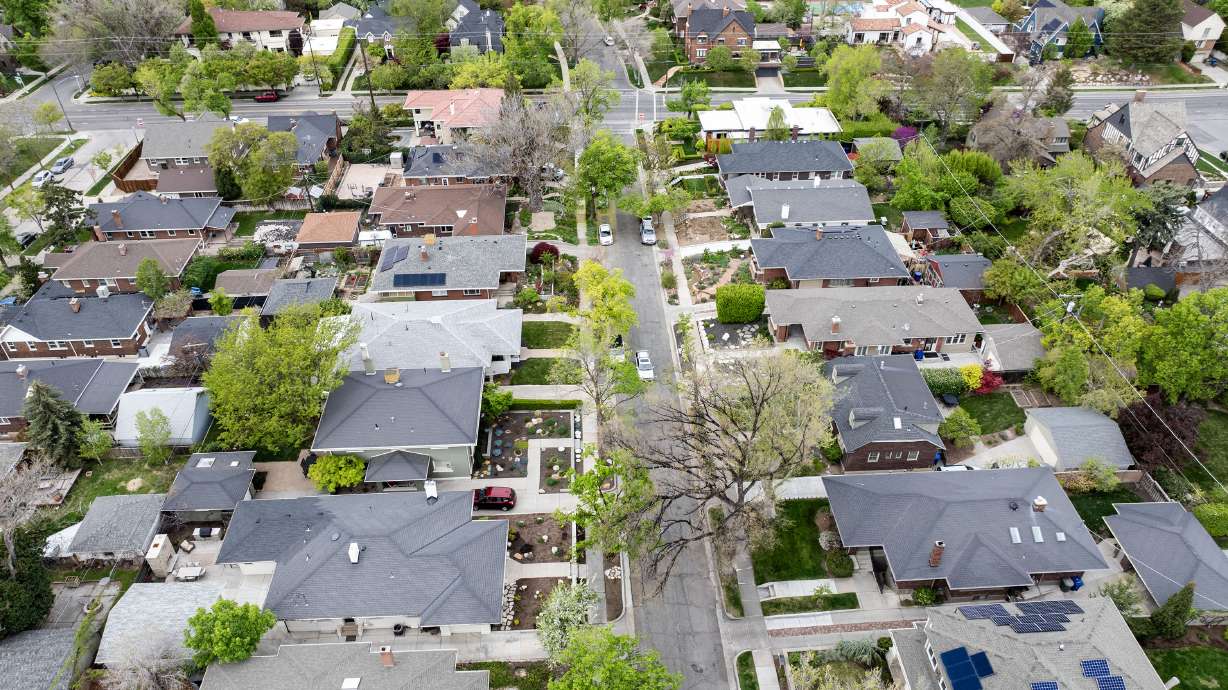
Over 18,000 radon tests in Utah homes throughout the last year showed elevated radon in every region — spanning high and low income areas, and both new and old homes.
Radon is a colorless and odorless gas that forms as uranium breaks down and can enter homes through cracks and openings in their foundation. It is the second leading cause of lung cancer.
Prevention
The 2026 State of Radon in Utah report from UtahRadon.org analyzed tests done between September 2025 and September 2026 and found 69.6% of homes had more than 2.0 pCi/L of radon, the level where the EPA recommends considering taking action, and 57.6% were above 2.7 pCi/L, the World Health Organization’s reference level.
The EPA’s action number is 4.0 pCi/L, but the report said that was set in 1986 and current research supports about two-thirds of radon deaths occur from exposure in homes with lower levels. According to the report, there is no known safe level for radon.
“Whatever the number, the goal is always to bring radon as low as possible,” it said.
Dr. Clarke Low, an oncologist with Intermountain Health, said although Utah has one of the lowest numbers of lung cancer diagnoses, it is still the No. 1 cause of cancer deaths, partially because it is often diagnosed late.
“We want to do everything that we can to prevent lung cancer. The best treatment for any type of cancer, especially lung cancer, is prevention,” he said.
Now, he said some radon-caused cancers can be treated with pills that are remarkably effective and easier to tolerate than chemotherapy, according to Low.
Lung cancer screening at this point is only recommended for people who have used tobacco for an extended period of time. But Low said if people wait for symptoms, they will already be at stage 4 cancer, which is treatable but will not likely be cured.
He hopes there will be a cancer screening in the coming years that is more accessible to help screening expand to those with radon exposure as well.
More homes with unsafe levels
Bill Johnson, of Park City, learned he had lung cancer while getting treatment for a back injury he had while shoveling snow. He said emergency room scans showed cancer not just in his lungs, but some that had spread to his pelvis, spine and brain. At the time he said he was very active and he had never smoked.
His family had tested their home for radon when they first moved in, but he encouraged people to remember to test for radon again. The recommendation from the American Lung Association is to test at least every two years.
TJ Mellars, general manager of Utah Radon Services, explained that radon is sucked into homes because of pressure differences. If there is a source of radon gas in the soil, it will come up in any home on the ground. He said every home should be tested.
Around the country, about one in 15 homes has an unsafe radon level, but in Utah it is around one in three, with some cities being even worse. He said there have been some cases of homes with more than 100 times the action level.
Even if radon is not found in a neighboring home, he said it could be found in yours. He said continuous monitoring is best.
There is higher radon potential in homes where volcanic and granitic rocks are found, like south-central and western Utah and on the benches in the Wasatch Front near mountains. Radon is typically lower on the valley floors — but the report said it is present in “every area of Utah.”
Grantsville, Perry, Smithfield and Providence were the four cities with at least 50 tests analyzed that had the highest number of homes above 2.7 pCi/L — around 80%. Sanpete, Box Elder, Sevier, Wasatch and Cache county each had 2.7 pCi/L levels in between 70 and 80% of homes.
Clinton, Washington, Hurricane and Roy had the lowest percentage of concerning numbers. Washington County only had 20% of homes with 2.7 pCi/L, closely followed by Iron and Kane counties at 25% of homes.
Addressing high radon levels is as simple as installing a pump that takes the air from soil under the home and routes it away from the home. Mellars said it costs around $2,000 and takes about three hours to install.
Radon advocacy
Mellars hopes the data in this report will help people take the issue more seriously. Right now there are no Utah laws requiring radon testing.
“We have to do our best to encourage our state to be mindful of this, to have good public awareness that this is the greatest lung-cancer related environmental risk that we have control over reducing our exposure,” he said.
Some suggestions of laws in other states include requiring a radon test during the home purchasing process or making newly constructed homes more radon resistant.
He noted that receiving a free test kit in the mail doesn’t help unless you do the test, which requires letting it sit out for multiple days, and sending it back to the lab.
Radon tests through UtahRadon.org are free, but around the state there have been an average of only 15 tests for every 1,000 homes. Radon levels typically rise in the winter as homes are closed and heated so testing in the winter can better show how high the radon levels get in a home.
The Key Takeaways for this article were generated with the assistance of large language models and reviewed by our editorial team. The article, itself, is solely human-written.