She was just a teenager when she realised she wanted to live independently on her own terms, a conviction that eventually led her to consciously choose not to marry.
At 45, Manisha runs her own practice and the Wildfern Pottery Studio, where she conducts clay workshops, mentors students and works on her art projects.
On one side were married women whose lives revolved around husbands, children and extended families. On the other hand were her unmarried teachers—the women society often labelled “spinsters”, but whose lives seemed to hold a wider world.
As a teenager studying at St. Mary’s Convent School in Nainital, Manisha Sah Thulgharia—now an environmental artist—often found herself quietly observing these contrasting lives.
The world around her may have looked at those single teachers, women in their 30s and 40s, with quiet judgment. But to young Manisha, their lives appeared strikingly different.
“They seemed independent,” she remembers. “They had time for themselves. They travelled, went out to cafés, and spent weekends the way they wanted. Their world felt wider.”
Those small observations stayed with her. Years later, they would shape one of the most defining choices of her life: to live on her own terms—and not marry.
The Teenager Who Wanted Independence
Growing up in the Kumaon hills, nature was never distant from Manisha’s life. The forests, trees and mountain landscapes around Nainital shaped her imagination early on. They also became the conceptual foundation of her artistic language.
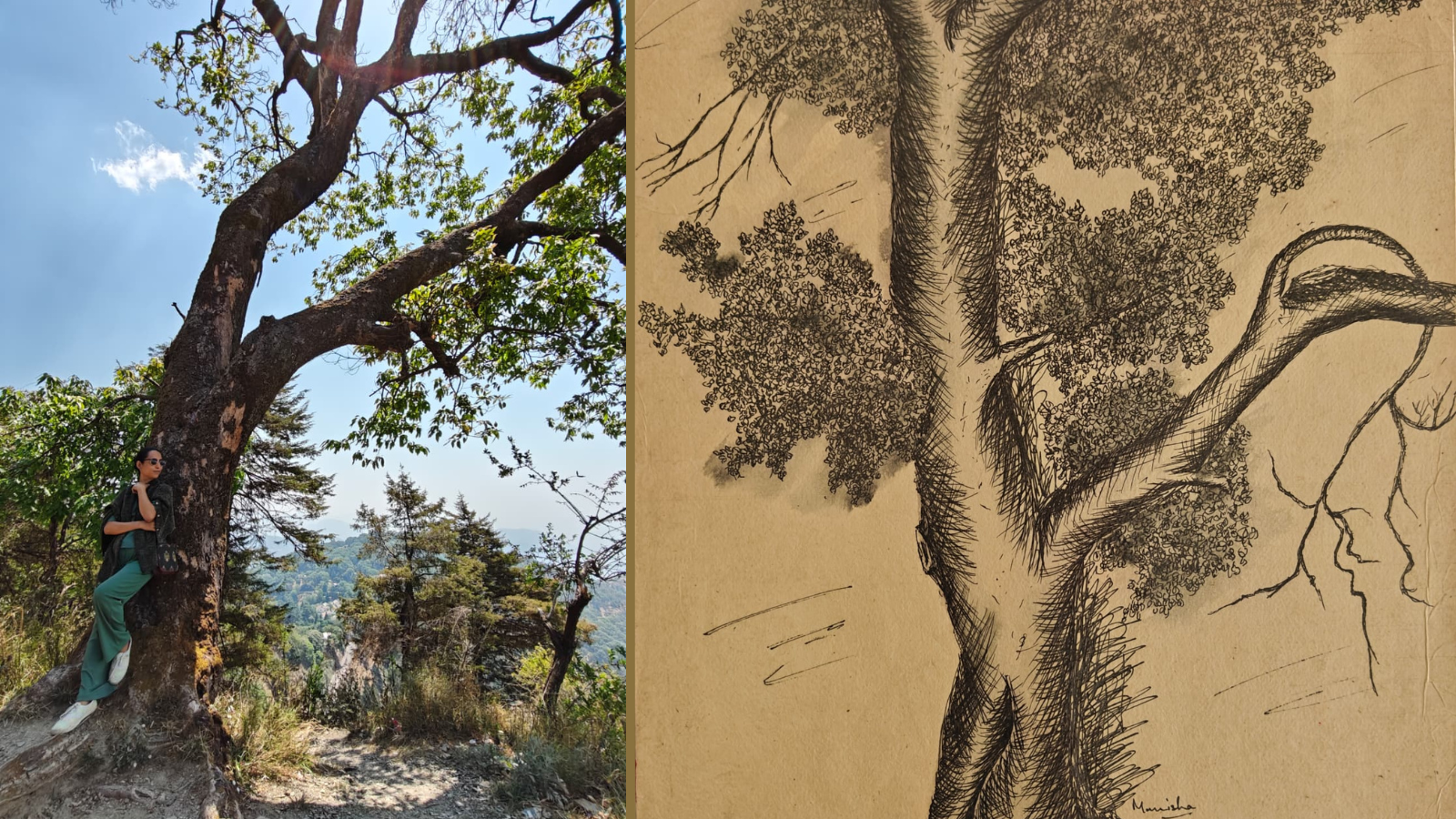
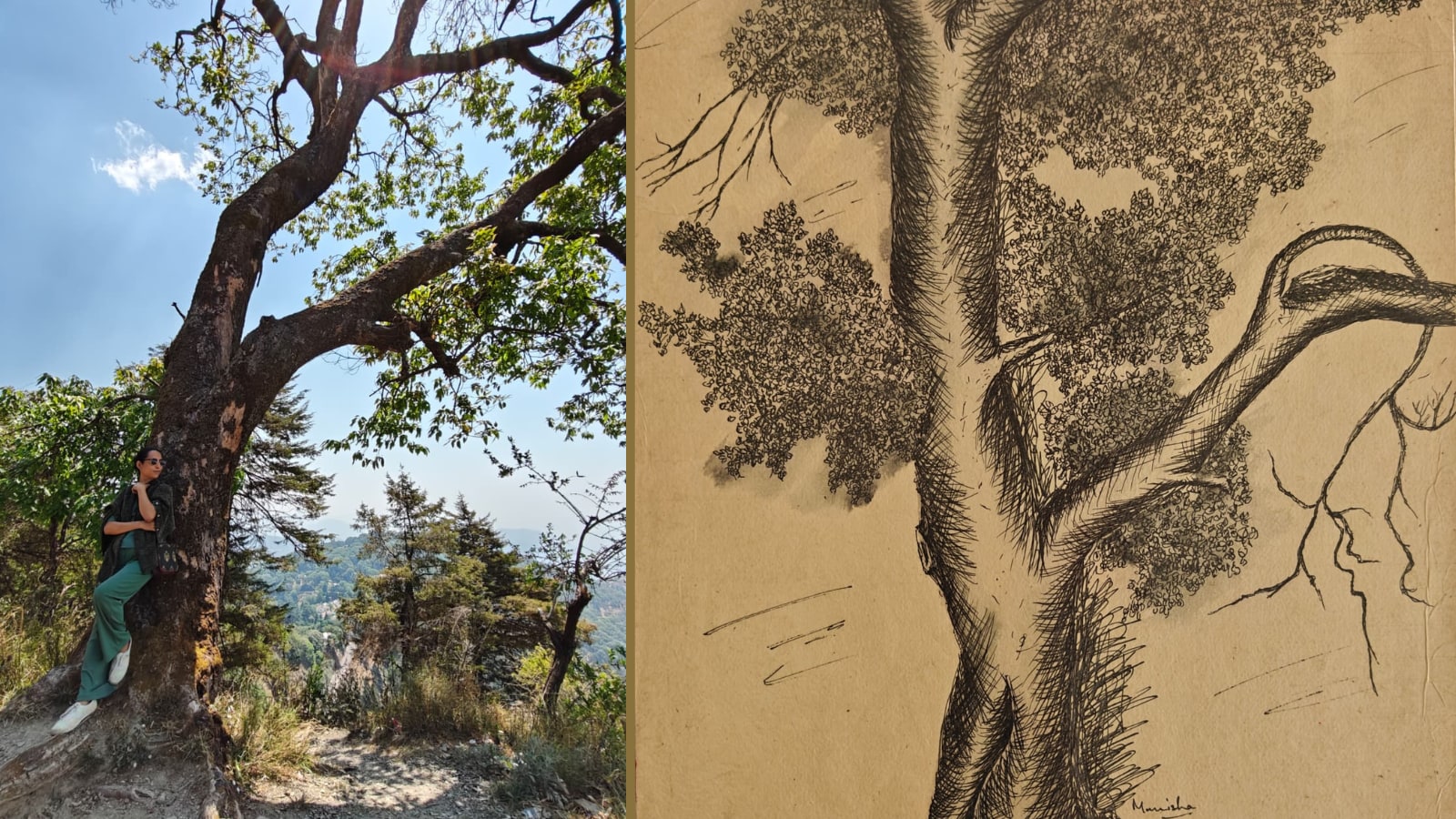
She fondly recalls her oldest friend—an oak tree in a forest near her home in Nainital. “I always visit my friend whenever I’m back in my hometown. It has seen me grow,” she says. Perhaps it is no surprise then that trees today occupy a central place in her work.
Pen & ink sketch made by Manisha nearly 25 years ago of her “tree friend”. “Looking back, I feel this tree quietly planted the seed for my later explorations of trees as silent witnesses to time, memory, and the fragile relationship between humans and nature.” (Image credit: Manisha Sah Thulgharia)
She describes them as silent witnesses to time—living presences that watch landscapes transform across generations. Through tree-like forms, organic structures and subtle architectural references, her work reflects the tensions between urban expansion and ecological fragility.
That tension is something she understands intimately. The ecological rhythms of the Himalayas, she says, stand in stark contrast to the fast-paced growth of cities like Delhi.
Long before she fully understood the implications of the choice, Manisha knew she wanted to live independently. “I was very clear that I wanted to be an artist,” she says. “And somewhere as a teenager, I knew I wanted to earn my own money and create my own identity.”
Her observations at school quietly reinforced that instinct. The independence she saw in single women around her contrasted sharply with the social expectations placed on married women.
“At that impressionable age, you start forming ideas,” she says. “What you see around you really matters.”
However, she emphasises the decision was not a dramatic rebellion. It emerged gradually as she focused on her artistic journey.
A Family That Allowed Space
In a country where marriage often dominates family conversations, Manisha says she was fortunate. Manisha, the eldest of three sisters, recalls that her mother never placed any obligation of marriage on her daughters.
When Manisha and her sisters were in their so-called “marriageable age”, proposals did come. But the family placed education and careers first.
Her sisters eventually married when they felt ready and found the right partners. Manisha did not. “I told my mother I wanted to focus on my work and career,” she says.
Her mother accepted the decision, even though, like many Indian mothers, she occasionally wonders if her daughter might one day find a partner.
“But she has seen how I work, how I run my studio, how I conduct my life,” Manisha says. “She’s happy seeing that.”
What Singlehood Has Given Her
Choosing to remain unmarried, she says, has brought one invaluable thing—freedom. The freedom to travel without negotiating schedules.
The freedom to move cities if she chooses. The freedom to devote long hours to her practice without balancing domestic expectations.
“Usually, people have to check with everyone before making decisions,” she says. “I don’t have to do that.” That autonomy, she believes, has shaped her artistic journey.
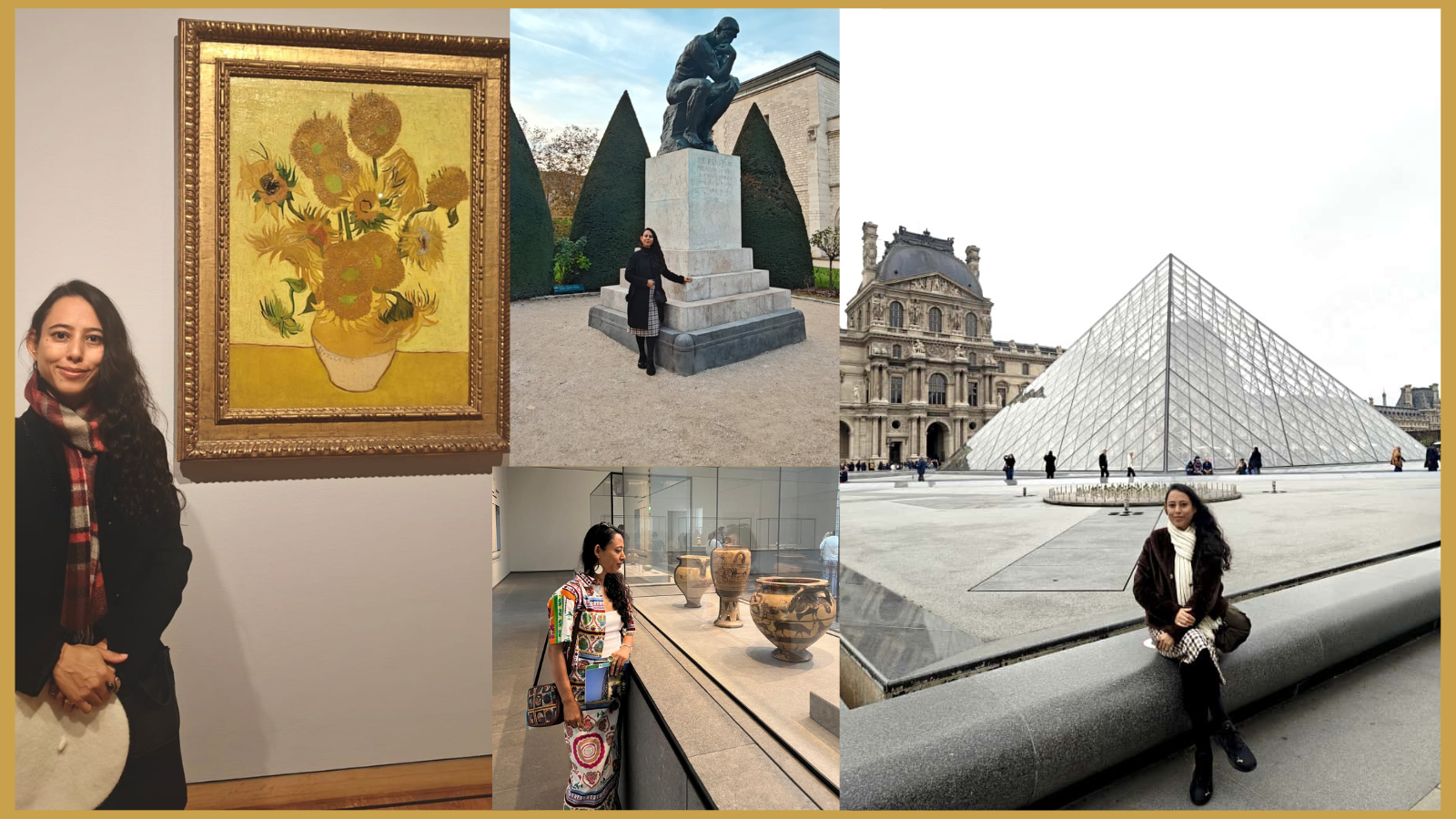
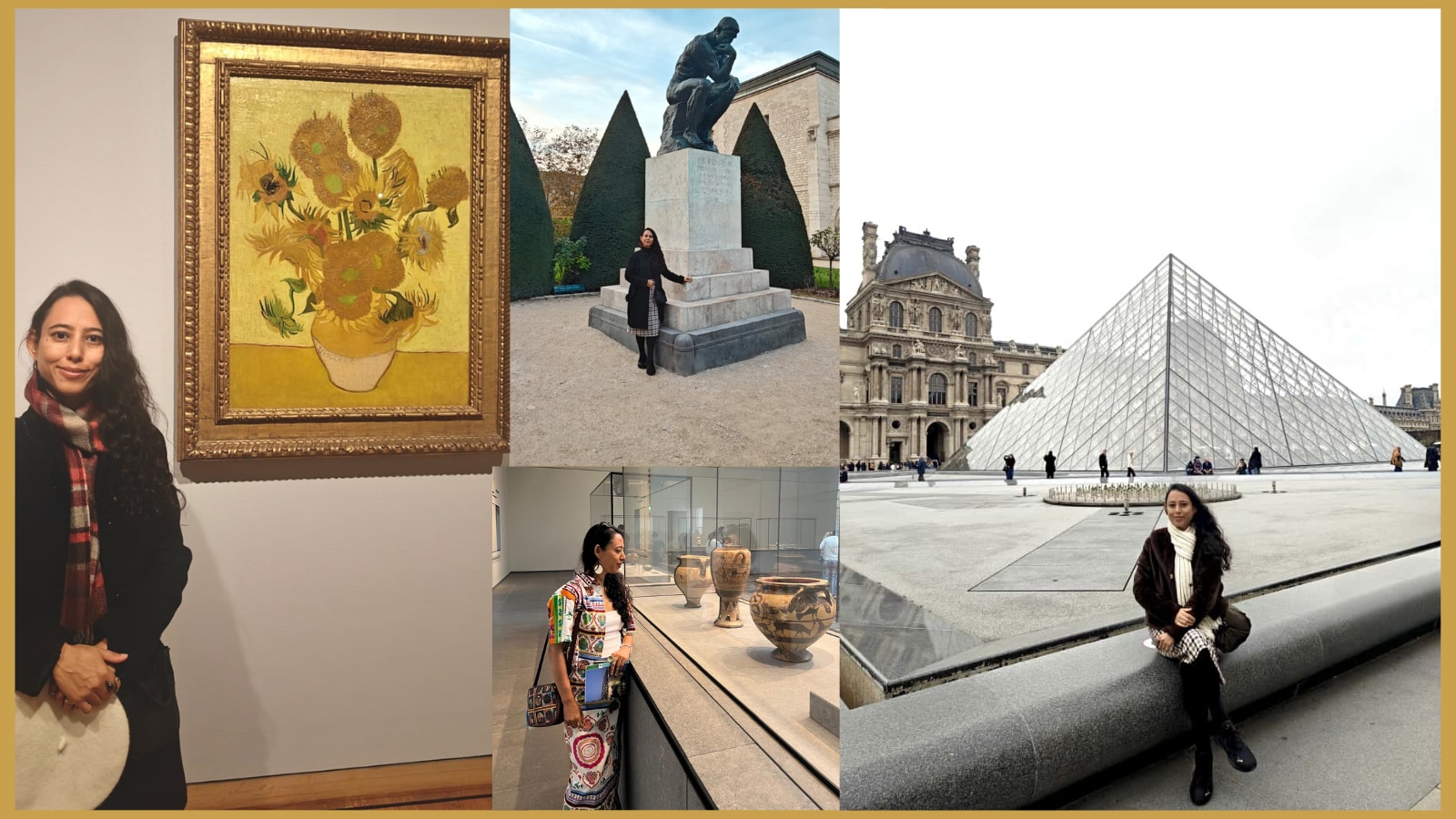
Thulgharia has travelled to several museums, including the Louvre Museum and the Van Gogh Museum, to experience the works of great masters and connect with fellow contemporary artists. (Image credit: Manisha Sah Thulgharia)
But the choice has its trade-offs. She candidly reveals that singlehood is not without its challenges.
Human beings, she says, are social creatures. “There are moments when you miss having someone to share memories with,” she says. “Someone to travel with or talk to.”
Those gaps, she adds, are often filled by friends, siblings and meaningful conversations within the artistic community.
What It’s Like Being An Unmarried Woman In India
There are still people who ask why she never married. Some assume something must be “wrong”. However, she believes India is gradually becoming more accepting of women choosing alternative life paths.
Sometimes the most unexpected people surprise her. “I’ve had aunties tell me, ‘Why don’t you try a live-in relationship?’,” she says with a laugh.
“When women see that you’re happy and living on your own terms, many of them actually appreciate it.”
Lessons From A Life Lived Independently
Looking back, Manisha believes every experience, good or difficult, has shaped her growth. Her advice to younger women is simple: do not abandon your dreams.
Life, she says, rarely arrives neatly planned. “You can never be ready for everything,” she says. “Experiences will come, and you learn from them.”
The key is to keep moving forward while protecting something she considers essential—peace of mind. “What makes you happy is very important,” she says. “Guard your peace of mind.”
Today, at 45, Manisha runs her own practice and the Wildfern Pottery Studio in Noida, where she conducts corporate workshops, mentors students and works on her art projects.
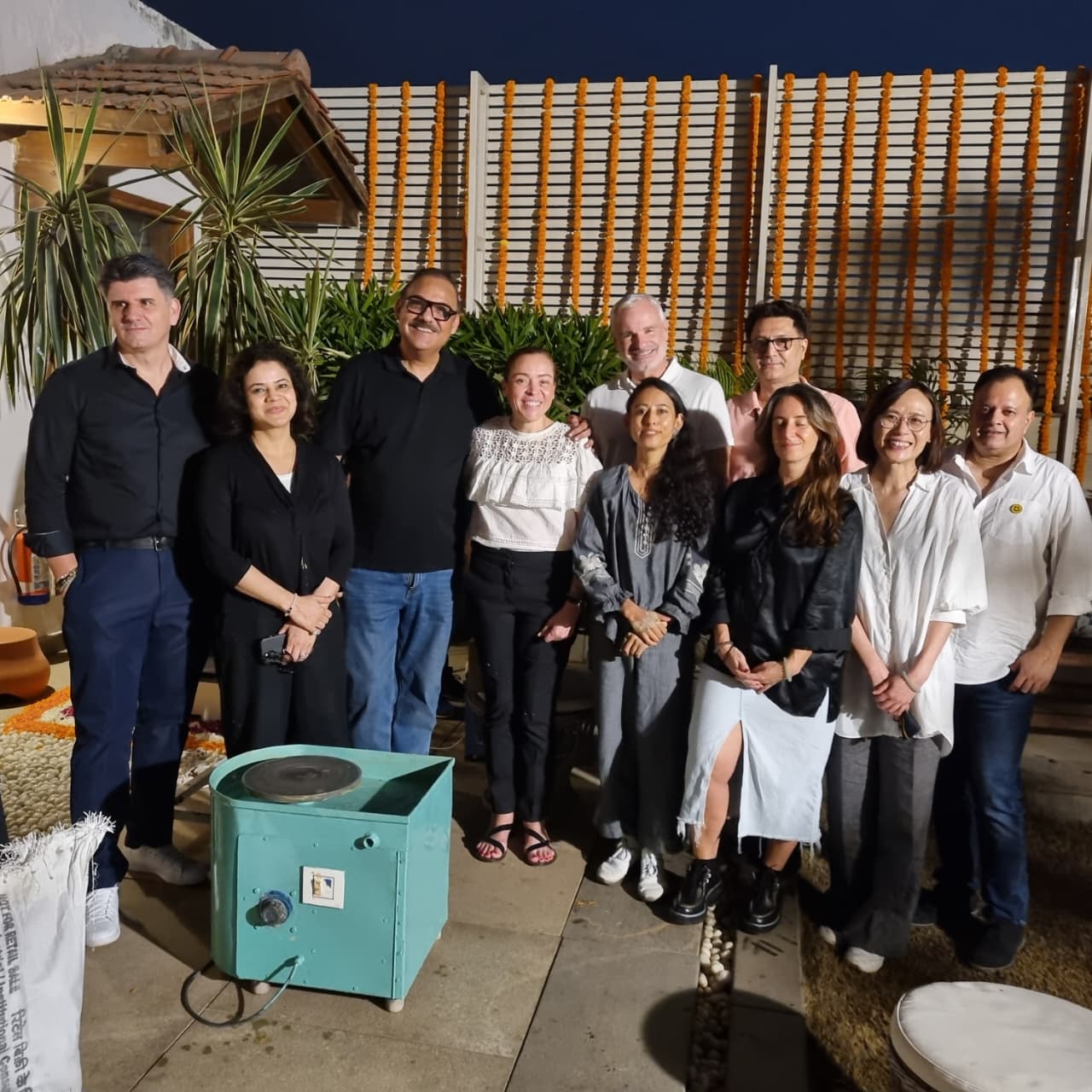
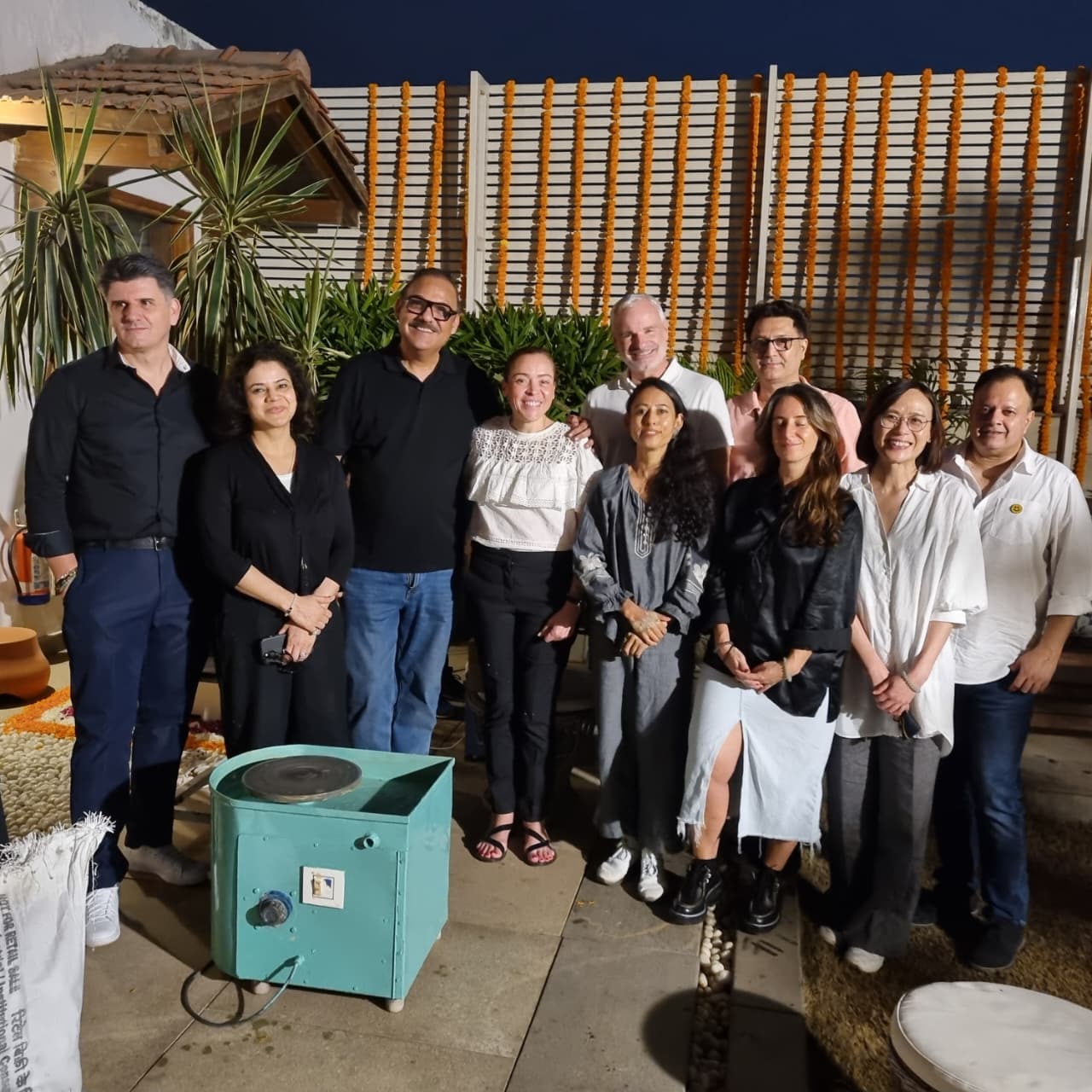
Manisha Sah Thulgharia conducted a workshop for the Louis Vuitton Paris team where clay became a medium for team building, sustainability awareness, and creative leadership. (Image: Manisha Sah Thulgharia)
Her day begins quietly. Mornings are her favourite time, which she spends tending to her garden while birds call from nearby trees. “That’s the best part of the day,” she says. “Being outside with nature.”
After that, she settles into the studio. Some days involve mentoring students. On others, she sketches, reads, researches or works on ongoing projects.
Living alone, she manages everything herself—from cooking meals to organising her schedule. But she sees that independence as a gift.
“If tomorrow I want to shut my studio and travel for ten days, I can,” she says. “I don’t have to ask anyone.”
Sometimes that freedom is as simple as deciding to spend a day visiting galleries or museums instead of teaching classes. “It gives you flexibility,” she says. “That space is important for an artist.”
The Artist’s Lifelong Journey
For Manisha, art is not something one completes; it is something one grows with. “Being an artist is an ongoing journey,” she says. “You keep learning every day.”
A book can spark a new idea. A conversation with another artist can open a new direction. A landscape seen during travel may later appear in a sculpture.
Clay, in particular, holds deep meaning in her work. As a material drawn directly from the earth, it allows her to engage physically and symbolically with the landscape. Her ceramic forms often evoke processes of growth, erosion and transformation.
In many ways, the material mirrors the themes she explores: the slow rhythms of nature versus the accelerated pace of human development.
When asked to imagine her life as an artwork, Manisha smiles. She imagines a vessel—perhaps a ceramic sculpture. Not empty, but holding space and meaning.
It would not be merely decorative. It would carry a message. Perhaps a piece that reflects the conflict between human expansion and the natural world. Perhaps one shaped like a tree or a form emerging from the earth.
That message, she adds, would be simple: A reminder of what humanity risks losing as forests disappear and cities grow.
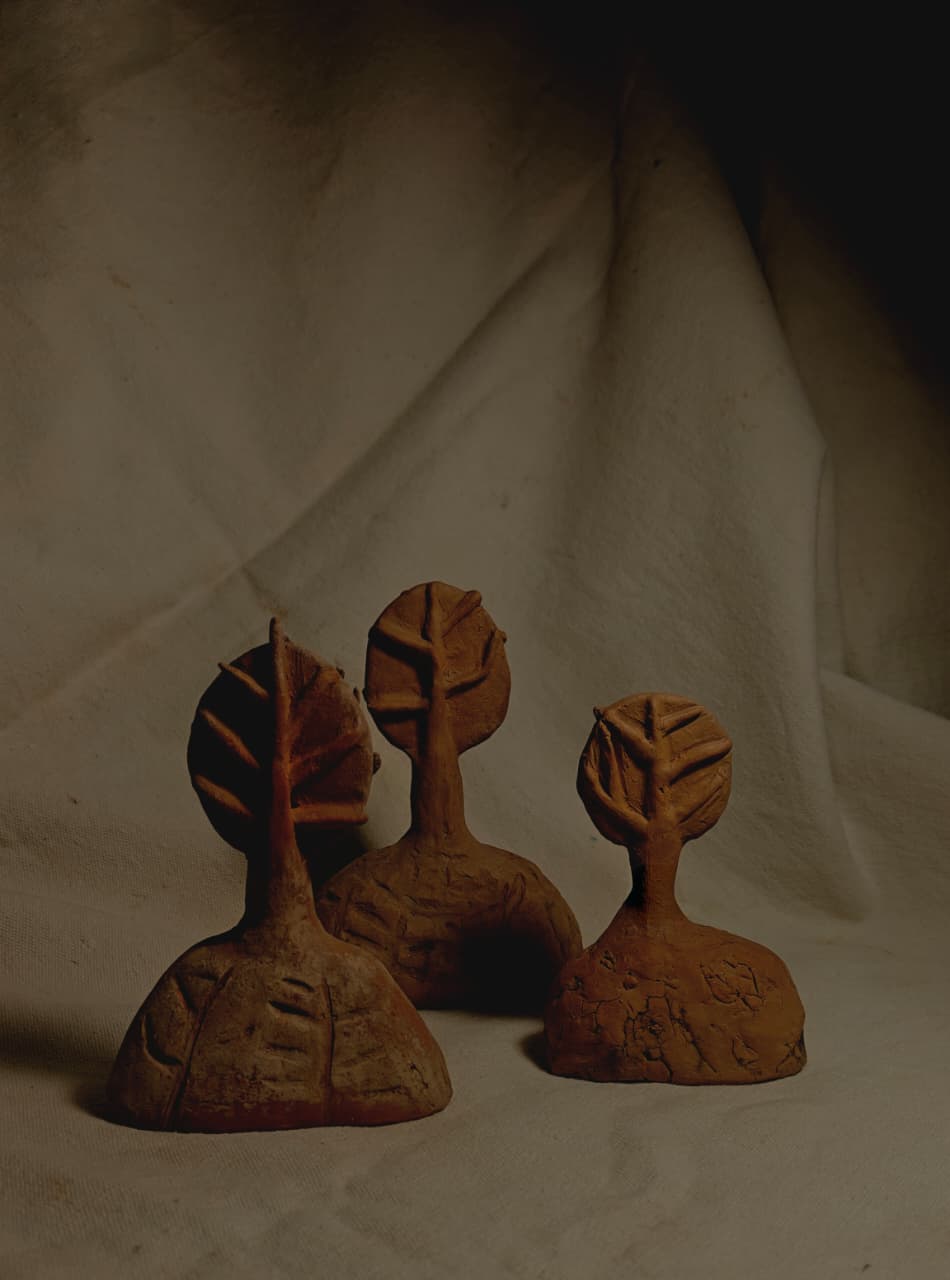
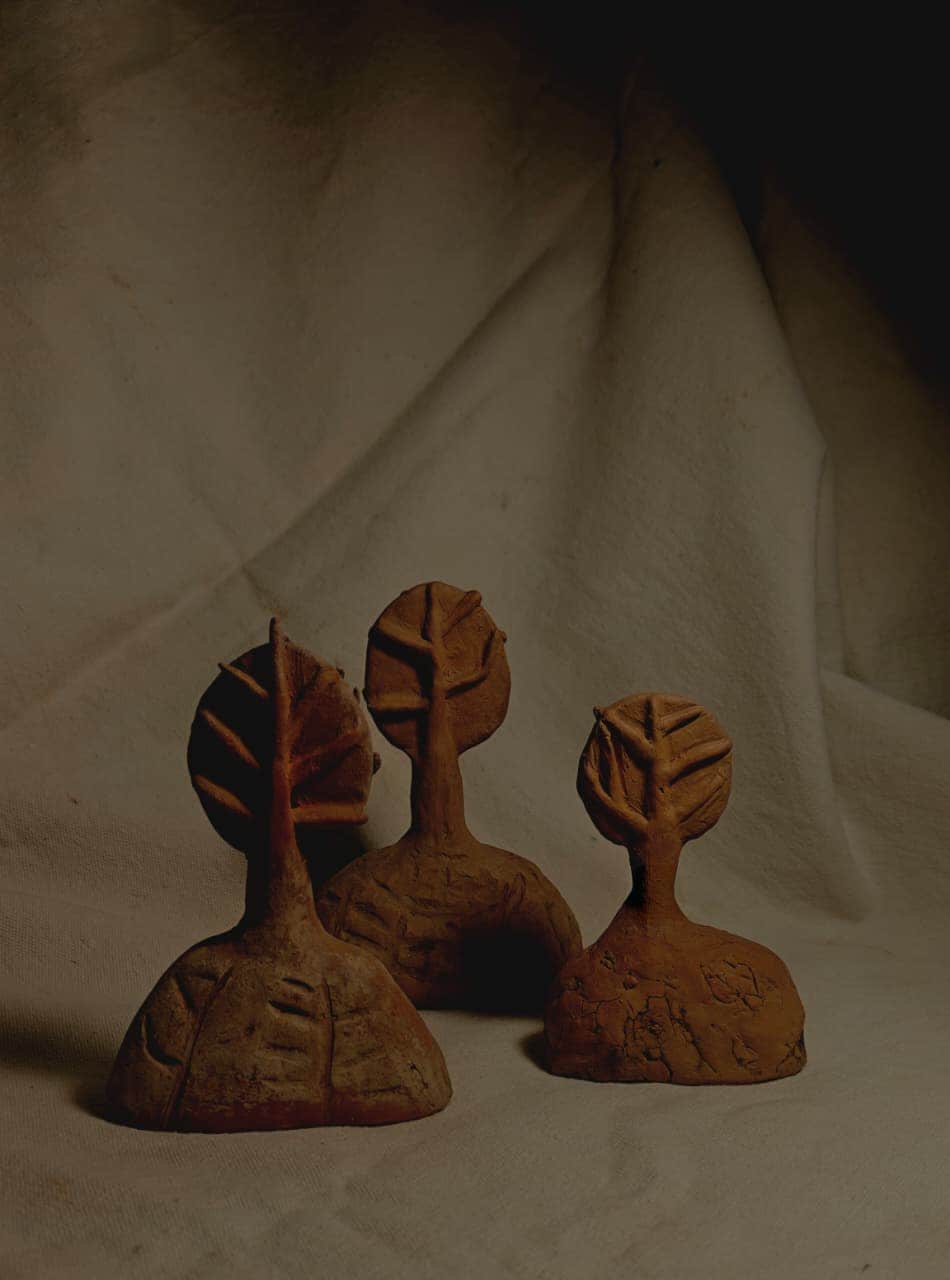
‘Trees as Silent Witnesses’, in this series, Thulgharia explore trees in human-like forms. “As silent witnesses, trees observe the changing world around them, standing rooted in one place for decades, sometimes even centuries.” (Image credit: Manisha Sah Thulgharia)
Manisha is currently working on catalogues for her upcoming exhibitions while continuing her studio practice and workshops.
Much like the clay she works with, her journey continues to evolve. And just like the trees she so often sculpts, her life stands quietly rooted in a choice she made long ago—to grow in her own direction.
First Published:
March 15, 2026, 13:32 IST
Disclaimer: Comments reflect users’ views, not News18’s. Please keep discussions respectful and constructive. Abusive, defamatory, or illegal comments will be removed. News18 may disable any comment at its discretion. By posting, you agree to our Terms of Use and Privacy Policy.
The world around her may have looked at those single teachers, women in their 30s and 40s, with quiet judgment. But to young Manisha, their lives appeared strikingly different.
“They seemed independent,” she remembers. “They had time for themselves. They travelled, went out to cafés, and spent weekends the way they wanted. Their world felt wider.”
Those small observations stayed with her. Years later, they would shape one of the most defining choices of her life: to live on her own terms—and not marry.
The Teenager Who Wanted Independence
Growing up in the Kumaon hills, nature was never distant from Manisha’s life. The forests, trees and mountain landscapes around Nainital shaped her imagination early on. They also became the conceptual foundation of her artistic language.
She fondly recalls her oldest friend—an oak tree in a forest near her home in Nainital. “I always visit my friend whenever I’m back in my hometown. It has seen me grow,” she says. Perhaps it is no surprise then that trees today occupy a central place in her work.
Pen & ink sketch made by Manisha nearly 25 years ago of her “tree friend”. “Looking back, I feel this tree quietly planted the seed for my later explorations of trees as silent witnesses to time, memory, and the fragile relationship between humans and nature.” (Image credit: Manisha Sah Thulgharia)
She describes them as silent witnesses to time—living presences that watch landscapes transform across generations. Through tree-like forms, organic structures and subtle architectural references, her work reflects the tensions between urban expansion and ecological fragility.
That tension is something she understands intimately. The ecological rhythms of the Himalayas, she says, stand in stark contrast to the fast-paced growth of cities like Delhi.
Long before she fully understood the implications of the choice, Manisha knew she wanted to live independently. “I was very clear that I wanted to be an artist,” she says. “And somewhere as a teenager, I knew I wanted to earn my own money and create my own identity.”
Her observations at school quietly reinforced that instinct. The independence she saw in single women around her contrasted sharply with the social expectations placed on married women.
“At that impressionable age, you start forming ideas,” she says. “What you see around you really matters.”
However, she emphasises the decision was not a dramatic rebellion. It emerged gradually as she focused on her artistic journey.
A Family That Allowed Space
In a country where marriage often dominates family conversations, Manisha says she was fortunate. Manisha, the eldest of three sisters, recalls that her mother never placed any obligation of marriage on her daughters.
When Manisha and her sisters were in their so-called “marriageable age”, proposals did come. But the family placed education and careers first.
Her sisters eventually married when they felt ready and found the right partners. Manisha did not. “I told my mother I wanted to focus on my work and career,” she says.
Her mother accepted the decision, even though, like many Indian mothers, she occasionally wonders if her daughter might one day find a partner.
“But she has seen how I work, how I run my studio, how I conduct my life,” Manisha says. “She’s happy seeing that.”
What Singlehood Has Given Her
Choosing to remain unmarried, she says, has brought one invaluable thing—freedom. The freedom to travel without negotiating schedules.
The freedom to move cities if she chooses. The freedom to devote long hours to her practice without balancing domestic expectations.
“Usually, people have to check with everyone before making decisions,” she says. “I don’t have to do that.” That autonomy, she believes, has shaped her artistic journey.
Thulgharia has travelled to several museums, including the Louvre Museum and the Van Gogh Museum, to experience the works of great masters and connect with fellow contemporary artists. (Image credit: Manisha Sah Thulgharia)
But the choice has its trade-offs. She candidly reveals that singlehood is not without its challenges.
Human beings, she says, are social creatures. “There are moments when you miss having someone to share memories with,” she says. “Someone to travel with or talk to.”
Those gaps, she adds, are often filled by friends, siblings and meaningful conversations within the artistic community.
What It’s Like Being An Unmarried Woman In India
There are still people who ask why she never married. Some assume something must be “wrong”. However, she believes India is gradually becoming more accepting of women choosing alternative life paths.
Sometimes the most unexpected people surprise her. “I’ve had aunties tell me, ‘Why don’t you try a live-in relationship?’,” she says with a laugh.
“When women see that you’re happy and living on your own terms, many of them actually appreciate it.”
Lessons From A Life Lived Independently
Looking back, Manisha believes every experience, good or difficult, has shaped her growth. Her advice to younger women is simple: do not abandon your dreams.
Life, she says, rarely arrives neatly planned. “You can never be ready for everything,” she says. “Experiences will come, and you learn from them.”
The key is to keep moving forward while protecting something she considers essential—peace of mind. “What makes you happy is very important,” she says. “Guard your peace of mind.”
Today, at 45, Manisha runs her own practice and the Wildfern Pottery Studio in Noida, where she conducts corporate workshops, mentors students and works on her art projects.
Manisha Sah Thulgharia conducted a workshop for the Louis Vuitton Paris team where clay became a medium for team building, sustainability awareness, and creative leadership. (Image: Manisha Sah Thulgharia)
Her day begins quietly. Mornings are her favourite time, which she spends tending to her garden while birds call from nearby trees. “That’s the best part of the day,” she says. “Being outside with nature.”
After that, she settles into the studio. Some days involve mentoring students. On others, she sketches, reads, researches or works on ongoing projects.
Living alone, she manages everything herself—from cooking meals to organising her schedule. But she sees that independence as a gift.
“If tomorrow I want to shut my studio and travel for ten days, I can,” she says. “I don’t have to ask anyone.”
Sometimes that freedom is as simple as deciding to spend a day visiting galleries or museums instead of teaching classes. “It gives you flexibility,” she says. “That space is important for an artist.”
The Artist’s Lifelong Journey
For Manisha, art is not something one completes; it is something one grows with. “Being an artist is an ongoing journey,” she says. “You keep learning every day.”
A book can spark a new idea. A conversation with another artist can open a new direction. A landscape seen during travel may later appear in a sculpture.
Clay, in particular, holds deep meaning in her work. As a material drawn directly from the earth, it allows her to engage physically and symbolically with the landscape. Her ceramic forms often evoke processes of growth, erosion and transformation.
In many ways, the material mirrors the themes she explores: the slow rhythms of nature versus the accelerated pace of human development.
When asked to imagine her life as an artwork, Manisha smiles. She imagines a vessel—perhaps a ceramic sculpture. Not empty, but holding space and meaning.
It would not be merely decorative. It would carry a message. Perhaps a piece that reflects the conflict between human expansion and the natural world. Perhaps one shaped like a tree or a form emerging from the earth.
That message, she adds, would be simple: A reminder of what humanity risks losing as forests disappear and cities grow.
‘Trees as Silent Witnesses’, in this series, Thulgharia explore trees in human-like forms. “As silent witnesses, trees observe the changing world around them, standing rooted in one place for decades, sometimes even centuries.” (Image credit: Manisha Sah Thulgharia)
Manisha is currently working on catalogues for her upcoming exhibitions while continuing her studio practice and workshops.
Much like the clay she works with, her journey continues to evolve. And just like the trees she so often sculpts, her life stands quietly rooted in a choice she made long ago—to grow in her own direction.
Stay Ahead, Read Faster
Scan the QR code to download the News18 app and enjoy a seamless news experience anytime, anywhere.