A London mother-of-two, diagnosed with triple positive breast cancer at 37, has described the medically-induced early menopause she endured as “harder” than chemotherapy.
Anj Periyasamy, a 41-year-old physiotherapist, said her specific type of breast cancer is “fed by hormones” so she essentially needs to keep her ovaries “asleep”.
This prevents her from using HRT to ease her list of symptoms, which includes night sweats, hot flushes, mood swings, low libido, hair thinning, muscle aches and tendon pain.
“Menopause sucks,” Anj said. “It sucks big time. There are so many facets to it that nobody talks about.
“I cried in front of my oncologist and I was just like, ‘This is unbearable, and I just can’t do this. I’m drenched (in sweat from hot flushes) half the time. My tendons are painful. It’s affecting my mood. I don’t know if it’s a post-chemo fallout and I don’t know if it’s post-menopause fallout’. And he assured me it was probably menopause.
“I knew chemotherapy would be temporary, but menopause psychologically gets to you, as well as physically.”
Looking back on when she was first diagnosed in March 2022, Anj said the only symptom she had before she found a lump on the underside of her breast was feeling “knackered”, which she “put down to motherhood” from looking after her daughters, Jasmin and Maya, who were five and two respectively at the time.
Anj said she thought that it was “probably nothing” but “something just didn’t sit right”, so she had a virtual GP appointment where she was encouraged to get an in-person examination.
Attending a clinic in central London, Anj said she had a consultation where the breast surgeon agreed that it was “probably nothing” and that she was “too young” for breast cancer, but still encouraged her to have a mammogram, ultrasound and a biopsy as a precaution.
Within a week, Anj was advised to go for an MRI, where she said she looked at the specialist “square in the eye” and asked: “Is this sinister or not? Just tell me straight.”
After the breast surgeon confirmed her suspicions that it could be cancer, Anj remembered she said: “But it can’t be. What about my children? I have to be around for my kids. They’re so little.”

Over the course of the next six months, Anj said she had 16 rounds of chemotherapy, followed by a double mastectomy and breast reconstruction, 15 rounds of radiotherapy, as well as 14 rounds of IV Herceptin (a targeted antibody therapy to inhibit tumour growth) and six rounds of IV bisphosphonates (a medication to strengthen bones).
She said she also had monthly injections of Zoladex and Letrozole to lower her hormone levels and keep her in medical menopause, before she switched to Tamoxifen after two years due to “horrid” side effects.
On top of losing her hair, eyelashes and eyebrows towards the end of her chemotherapy treatment, Anj said her fingernails blackened, and she experienced fatigue and “chemo fog” that meant her body was “almost relearning everything again”.
But Anj said the side effects from menopause were even “harder”.
“I had tendon pain so I couldn’t even go to the gym and exercise properly because my feet hurt,” Anj said.
“If I sat for 20 minutes, I’d get up off the sofa and I would look like a penguin… It’s horrible, honestly.
“The thought of osteoporosis really scares me too because (I’m encouraged) to do weight-bearing exercise and strength work, but then my tendons hurt.
“And finally, I’m the most placid, chilled person, but the menopause rage – the pure rage – was like, ‘What is wrong with me? Why am I so angry?’. I used to get so angry about the girls bickering and I’d just go from zero to 100 really quickly.
“Sometimes I’d say to my husband, Damesh, that you need to take them. Just deal with them.
“Unfortunately, because my breast cancer was hormone-fed, I can’t use HRT to dampen the symptoms. I can’t even use certain herbal supplements. No one talks about this.”
Anj said her daughters noticed some of her symptoms, which prompted her to try to have an age-appropriate conversation with them about what she was going through.
She got in touch with the charity Breast Cancer Now, which gave her a children’s book called Mummy’s Lump, which Anj said she read by herself first and “had a cry”, then she spent “a whole week” mentally preparing to read it to her children.
“My two-year-old Maya was just not fussed,” Anj said.
“I then read it to the older one, Jasmin, and she was like, ‘Ok, can I go and watch Barbie now?’.”
Anj said she’s since had conversations with her children, looking back on her “short hair era” and moments where they noticed she was absent from their family home so that she could have hospital treatments.
She added: “Jasmin has asked, ‘Are you better now, mum?’. That’s always a really hard question to answer because I hope to God I am, but they also want to make sure their mum is around. I never talked about death, but it wasn’t easy for them to see me sick.”
In the aftermath of her diagnosis, Anj said she came across the charity Trekstock Cancer Support via social media, who she was initially going to work with in a professional capacity as a physiotherapist helping to “draw up exercise pathways” for the cancer survivors they work with.
Main symptoms of breast cancer in women
NHS
Symptoms of breast cancer in women may include:
- a lump, or swelling in your breast, chest or armpit
- a change in the skin of your breast, such as dimpling (may look like orange peel) or redness (may be harder to see on black or brown skin)
- a change in size or shape of 1 or both breasts
- nipple discharge (if you are not pregnant or breastfeeding), which may have blood in it
- a change in the shape or look of your nipple, such as it turning inwards (inverted nipple) or a rash on it (may look like eczema)
- pain in your breast or armpit which does not go away – breast pain that comes and goes is usually not a symptom of breast cancer
But then Anj said the charity asked her to take part in their new photography exhibition, entitled “Are You Better Yet?”.
She said: “It was really fun to be there. I did find it was nice because you get to go back over your story and get to (remember) the good and the bad, what you did it for, and why are you telling your story.”
“I think (the exhibition) is a much needed type of platform to raise awareness,” she added.
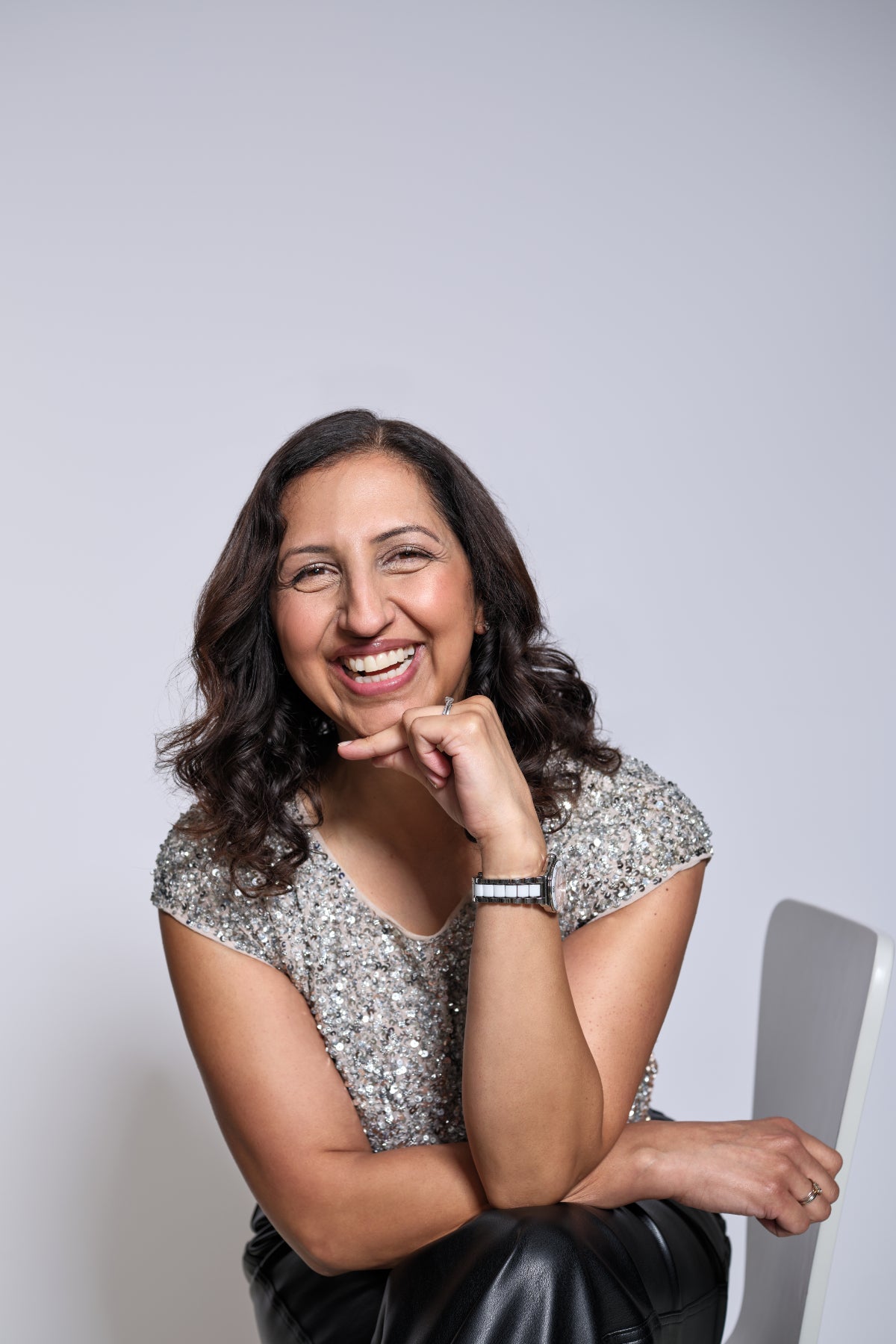
Four years on from her diagnosis, Anj said her eyebrows still haven’t fully grown back and her skin isn’t the same due to the menopause, but she’s living well.
She said she’s sharing her story now because she wants to be visible as a South Asian woman: “There’s not enough education out there, there’s not enough awareness, and there’s not enough people that look like me – young brown women.”
On what she wants her daughters to take from her journey, Anj hoped they would say one day: “I’m proud of you, mummy – you did it.”
She added: “But I also want them to read (about my story) and not be scared. It’s about being empowered and knowing how to get through a life crisis, then survive and thrive afterwards.”
Trekstock Cancer Support’s Are You Better Yet? exhibition runs until March 29 at the FUJIFILM House of Photography in London. You can follow Anj on TikTok here: https://www.tiktok.com/@physiobeatscancer