If you’ve ever tried to go on a calorie-controlled diet or do a “digital detox”, you’ll likely have experienced the high-stakes battle between willpower and temptation. This capitulation to our base impulses is often framed, in mainstream culture, as weakness. We should be able to exercise enough self-control to put our phones aside or turn down the offer of a free cookie with our morning coffee.
But what if our inability to stop doing things that are bad for us wasn’t really our fault at all? What if our core biological instincts were being manipulated?
That’s the conclusion that Nicklas Brendborg, a Danish biotech researcher, has come to. His upcoming book, Super Stimulated, explores the power of what have been dubbed “supernormal stimuli” or “superstimuli”.
These are, in short, exaggerations of what an animal is naturally attracted to: “a stimulus that is a bigger, brighter or stronger version than the naturally occurring option”.
The term was first coined by a Dutch scientist, Nikolaas Tinbergen, after he ran a set of experiments with birds. He found that when he added fake eggs into the cage that were painted in bright colours and exaggerated to ridiculous proportions, the birds would inevitably choose to sit on the ersatz ones rather than their own eggs.
The reason for this is not that the birds were stupid or fickle; it is because this impulse is biologically baked in. “They’ve evolved to have an instinct that says, the bigger and brighter the egg, the better,” says Brendborg, “because the healthier the female is, and the more food she has access to, the bigger and more colourful the egg tends to be.”
In nature, there’s a very clear biological limit to this: a bird can’t lay an egg bigger than itself, and it can only be so bright based on natural pigmentation. And so the bird has never needed to develop a “ceiling” to this inclination – which means we can “trick this bird to make the wrong choice”, says Brendborg.
Why is he telling me about birds? Well, because the same biological hijacking that was used on our fine feathered friends can – and is – being applied to us.
The simplest direct comparison with the original experiment is sweets. “Take strawberries and strawberry-flavoured candy,” says Brendborg. “This is the exact same thing we’ve done – we’ve looked at the strawberries and said, ‘What is the essence of why these taste good?’ And one key reason is that humans like stuff that tastes sweet.”
We evolved this preference over millions of years, because it was useful for finding valuable foodstuffs: if something was sweet in nature, that indicated the fruit was ripe and, crucially, not poisonous. We developed no “ceiling” in our desire for sweet food, because we never needed to; there’s a natural limit to how sweet (and calorific) naturally occurring foods can be.
Our food is, quite simply, designed to make us overeat
But cut to modern times and modern technology, and it’s a real problem. We can now use refined and processed sugar to create strawberry sweets that are 10 times sweeter than a wild strawberry could ever be. Most people would, given the choice, probably prefer the strawberry sweet to the fruit. “And that starts a very unhealthy cycle where we end up making all the wrong choices for our health and wellbeing,” explains Brendborg.
We see this across the contemporary food landscape. Even savoury ultra-processed foods are packed with added sugar, because our stomach registers it (even if our tastebuds don’t) and cries out for more. Not to mention the amount of added salt and saturated fat present in much of modern food – both of which we’ve evolved to have a taste for.
Our food is, quite simply, designed to make us overeat, as evidenced by an ever-worsening obesity crisis, with two-thirds of all British adults registering as overweight.
The problem doesn’t stop with food. Other superstimuli include porn, which takes our healthy and natural appetite for sex and amplifies it; drugs, which crank up the dopamine and act as a shortcut to a temporary state of euphoria; and, of course, screens and smartphones, especially with the recent onslaught of news headlines sending us all into a headspin.
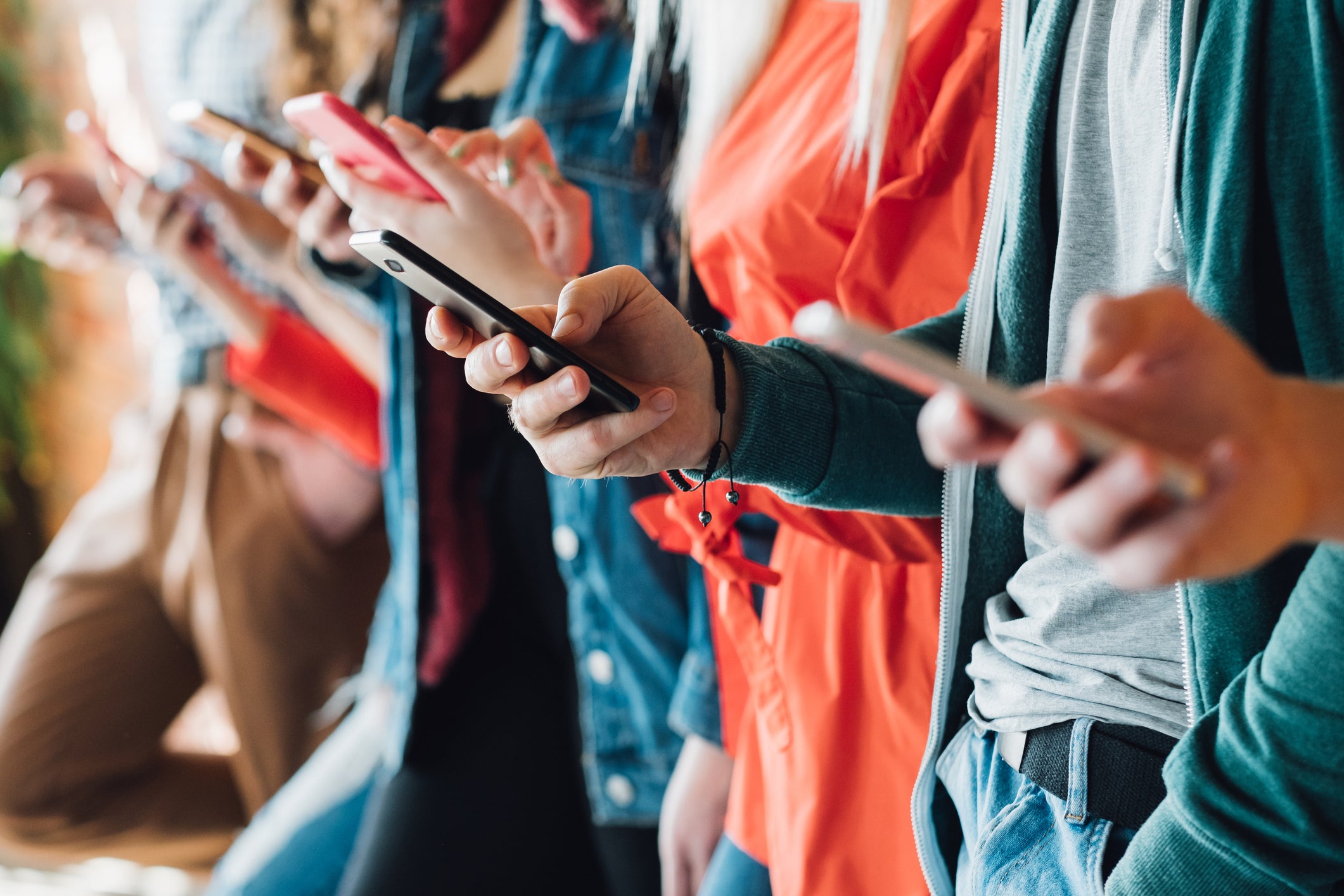
Again, biological imperatives are being manipulated. It’s no accident that phone apps feature bright colours. In nature, this often relates to ripe berries that are good to eat – hence our attraction to a pop of colour.
Social media, meanwhile, warps our innate desire for connection and approval by offering an “enhanced” version of socialisation. “We’re hardwired to like people acknowledging us for something or giving us compliments,” says Brendborg. This served us well in a natural context, promoting social cohesion, bonding and community. But social media exaggerates these effects, allowing an individual to get 100 “likes” rather than a couple of people acknowledging them IRL. Features like video view counts or the ability to see who’s watched an Instagram story also feed into our desire for attention.
This might make you feel fleetingly good, providing a quick and easy dopamine hit, but we’re already seeing the link between more time spent on phones and an accompanying loneliness and mental health epidemic.
There’s also the negative impact of being exposed to so many “superior” humans. To keep us hooked, the algorithm will unfailingly show us the most attractive/funny/successful people – “great for keeping your attention,” says Brendborg, “but given that we’re a social species, we make these subconscious comparisons with people we meet.” Online, these comparisons will feel overwhelmingly negative, telling us we’re at the bottom of the social pecking order.
You have these extremely bright people, with billions of pounds backing them, working towards one goal
Nicklas Brendborg, biotech researcher
None of this is happening by accident. In the world of food science, recipe ratios are tinkered with in order to strike the balance that proves most addictive. Companies have even stuck human guinea pigs in brain scanners while eating ice cream to see which formula is most effective at lighting up the reward centre of the brain. Products are designed to delay satiety so that customers eat more, resulting in us upping our calorie intake without feeling full.
Then there are the billions of pieces of data fed from your phone to big tech companies, which are constantly tweaking their apps in real time to make them as compulsive as possible.
This well and truly throws cold water on the idea that we are, as individuals, simply “weak” if we struggle to cut down on certain unhealthy behaviours. “You have these extremely bright people, with billions of pounds backing them, working towards one goal,” points out Brendborg. “It’s such an unfair fight.”
While this gives us permission to stop beating ourselves up when we fail, we don’t have to accept our fate. We can, and should, fight back.
Food with too much salt and sugar desensitises our palate – meaning we need to eat ever-greater amounts to reach the same pleasure highs. But we can also resensitise our palates; in one experiment, study participants who’d slashed their sugar intake rated desserts as tasting 40 per cent sweeter than the control group after three months. Cutting out sugar, in fact, makes berries taste sweeter, while superstimuli end up tasting super sickly.
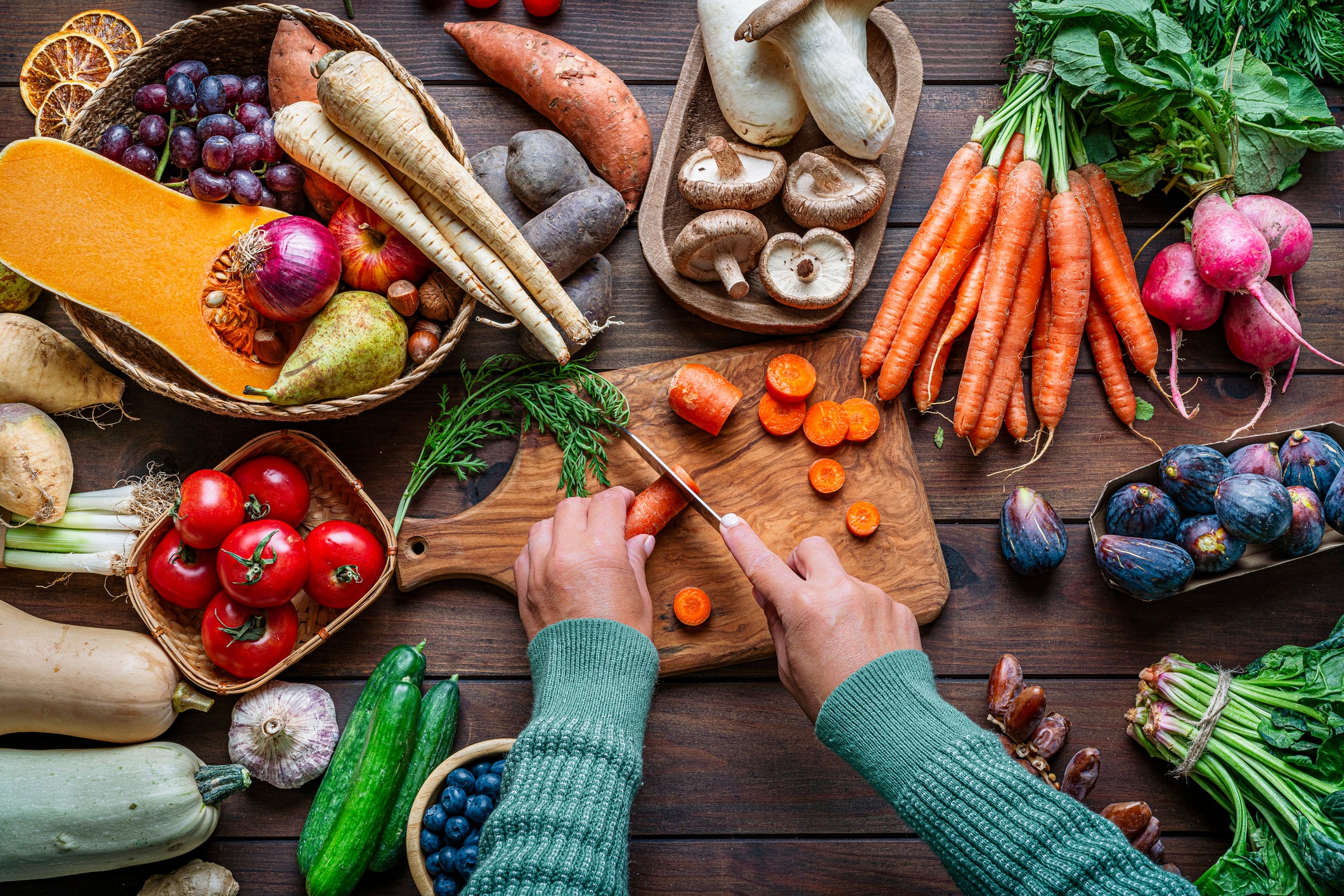
Variety may be the spice of life, but it’s also strongly associated with eating too much. One of Brendborg’s simplest tips is to try to make your diet as boring as possible. Various studies have shown that the more bland and uninteresting the diet, the less likely we are to overeat.
Boredom, in fact, is key to beating most superstimuli. Straightforward hacks can make our phones less exciting, such as changing the screen to greyscale and getting an app that “boringifies” your device by swapping out app icons for a text list. Keeping it out of the bedroom and using an old-fashioned alarm clock to wake up is also recommended.
Deleting social media from your smartphone is probably the easiest way to stop scrolling, but you could implement what Brendborg calls the “nuclear option” of having a “kale phone” and a “cocaine phone”. The former is the one you take out, and it only has necessary apps like maps and email. The latter has all the “good” stuff, but stays at home.
Embracing the boring may sound deeply unappealing, but it might just be the key to unlocking a healthier and happier life. Didn’t you hear? Beige is the new black.
Super Stimulated: How Our Biology Is Being Manipulated to Create Bad Habits – and What We Can Do About It, by Nicklas Brendborg, is out now with Hodder and Stoughton (£22 RRP).