Luxury fashion likes to project a very specific illusion: calm ateliers, quiet craftsmanship, lineage and heritage untouched by chaos. The world of haute leather and silk scarves exists, at least visually, far from tabloids and courtroom drama. But occasionally the outside world walks straight through the workshop doors.More than a decade ago, during what should have been a routine visit to one of the most guarded creative spaces in Paris – an Hermès leather atelier – an unexpected guest arrived alongside a group of high-profile visitors. The moment was brief, awkward, and largely forgotten at the time. Years later, it resurfaced through newly released documents, turning a quiet industry anecdote into an uncomfortable cultural footnote.At the centre of that story is Axel Dumas, the sixth-generation heir running Hermès, and a man whose leadership philosophy revolves around keeping the brand deliberately slow, private and insulated from spectacle.And then there was Jeffrey Epstein – a figure who represented the exact opposite of that philosophy.
A house built on discretion
To understand why the encounter felt so jarring inside fashion circles, you first have to understand Hermès itself.Unlike most global luxury giants, Hermès never chased expansion at the speed of demand. The brand became famous not by producing more, but by producing less – fewer bags, fewer stores, fewer public appearances. Waiting lists became part of its mythology. Silence became its marketing strategy.Where many houses operate like global corporations, Hermès still behaves like a family workshop that accidentally became a multinational empire.So when visitors enter an atelier, they usually do so quietly. Carefully selected journalists, select clients, occasionally artists. Not financiers known for cultivating influence networks.Which is why Dumas later described the moment with blunt simplicity: the visitor had essentially arrived uninvited.
The 2013 workshop visit
The visit took place in March 2013, just outside Paris, during a group tour that included filmmaker Woody Allen. According to Dumas, the controversial financier was not scheduled – he simply arrived with the group.Fashion insiders would later describe the situation as socially awkward rather than dramatic. No confrontation. No spectacle. Just the kind of polite distance the French luxury world specialises in when encountering people it does not wish to engage with.
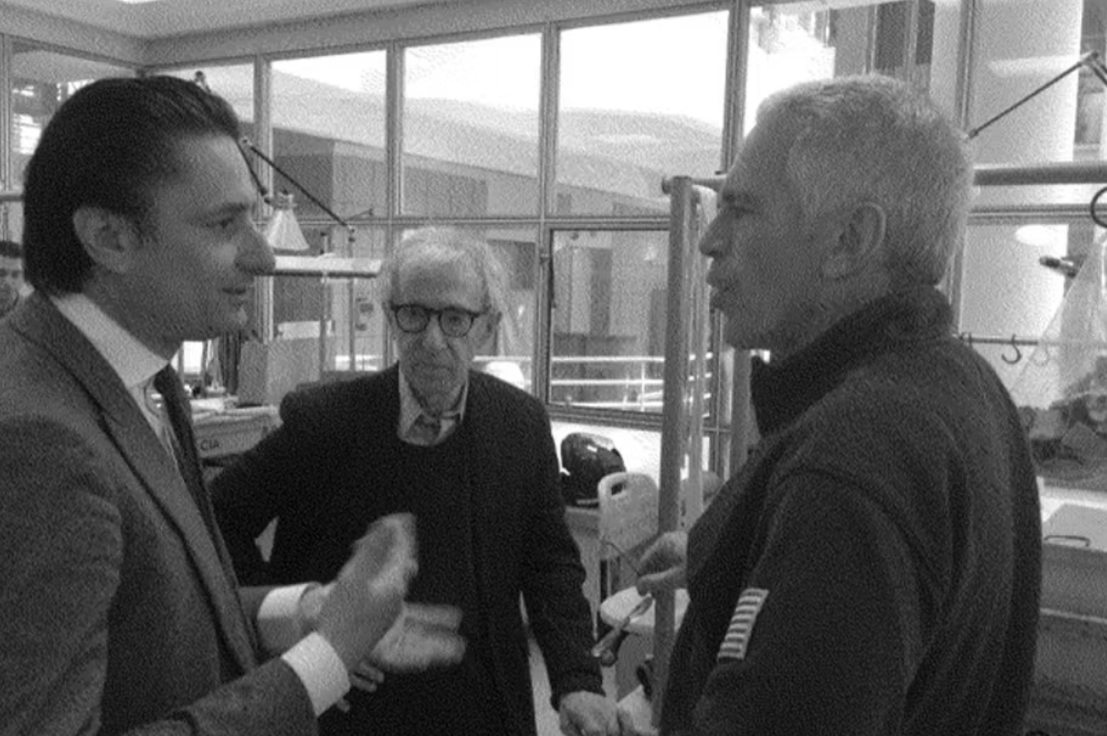
Dumas would later explain that he had previously declined multiple meeting requests and had no intention of forming a relationship.In other words: proximity, not association.The earlier refusal: a private jet and a boundaryThe most telling detail surfaced from an earlier year.In 2012, the company had reportedly been approached to decorate a private aircraft interior, the kind of ultra-bespoke project luxury houses sometimes accept for top clientele. Hermès declined. In luxury culture, refusals speak loudly. Brands rarely say no to money – they say no to context.At the time, Hermès leadership was already navigating an intense corporate battle against LVMH, which had quietly accumulated shares in the family-controlled house. The attempted takeover triggered paranoia, loyalty checks and heightened awareness about who was circling the brand.Dumas was young in leadership then, protective and cautious. The last thing the company wanted was another powerful outsider inserting themselves into its orbit.
Who Jeffrey Epstein actually was – and why his presence felt different
Before his criminal case became globally infamous, Epstein operated within elite financial and social circles across New York, London and Paris. He cultivated relationships with politicians, academics, billionaires and celebrities — often positioning himself as a connector rather than a traditional financier.He did not build a conventional investment firm empire in the way Wall Street figures typically do. Instead, his influence came from proximity to power: private gatherings, introductions and curated networks of wealthy individuals. This mattered in the context of fashion.Luxury brands survive on access – but carefully controlled access.There is a difference between wealthy clients and socially strategic operators.Inside couture culture, reputation functions like currency. Once a brand becomes associated with the wrong type of attention, distance becomes nearly impossible to rebuild. So houses like Hermès historically maintain strict social boundaries – even more than financial ones.By the early 2010s, Epstein already carried a controversial reputation in certain elite circles, long before his later arrest turned him into a global headline. For a brand built on generational trust, caution came naturally.
Why fashion houses guard their social circles
To outsiders, it may seem strange that a single unexpected visitor could matter. But fashion isn’t just design, it’s signalling.Luxury clients aren’t only buying leather or silk. They’re buying belonging to a cultural ecosystem: dinners, art patronage, private viewings, quiet prestige. The wrong association risks transforming exclusivity into spectacle.This is why heritage brands:rarely dress everyonequietly refuse certain collaborationslimit celebrity partnershipsand avoid overtly transactional relationshipsHermès, more than most, operates on social filtering.Not everyone wealthy fits the brand’s definition of luxury.
The tension between wealth and taste
The story also reveals a deeper truth about fashion: money and cultural acceptance are not identical.Some of the richest individuals in the world still struggle to enter certain legacy spaces – art patronage circles, old European maisons, heritage ateliers because those worlds operate on continuity, not only capital.Fashion historians often describe this as the difference between economic capital and cultural capital.Hermès historically protects the latter.So the workshop visit became symbolic – not scandalous, but illustrative – of how tightly controlled those spaces remain, even in a globalised era.
A brief moment, a long shadow
At the time, the encounter barely registered publicly. Years passed. Fashion continued its cycles – collections, handbags, waiting lists.Only much later, when large batches of legal documents became public, did the photo resurface and prompt questions. The image itself showed nothing remarkable: people standing in a workshop.Yet context transforms images.Dumas clarified the circumstances: no planned meeting, previous refusals, and deliberate distance. Within fashion circles, the explanation aligned with what insiders expect from a house like Hermès – polite acknowledgement paired with firm boundaries.
What the incident says about modern luxury
The episode highlights how the luxury industry has changed.In earlier decades, fashion often welcomed powerful patrons unquestioningly. Today, reputation risk travels faster than exclusivity can repair. Social media collapsed the barrier between private elite networks and public perception.Modern luxury therefore filters not just aesthetic collaborations but social ones. Heritage brands increasingly act less like sellers and more like curators of association.
The paradox of privacy in a visible world
Hermès built its identity on quietness – yet the digital age archives everything. Even accidental proximity can be rediscovered years later and reinterpreted.The atelier visit wasn’t significant because of what happened inside it. It mattered because luxury no longer controls narrative timing. Moments once forgettable now live permanently online.
Fashion’s unwritten rule: Distance is also branding
In the end, the story isn’t really about a single visitor or a single day. It’s about how legacy fashion houses maintain aura in a world obsessed with access.Saying yes builds business.Knowing when to say no preserves mythology.Hermès has survived nearly two centuries by choosing the latter more often than the former.And sometimes, maintaining that identity simply means keeping interactions brief, polite – and unmistakably limited.In luxury, the most powerful statement is rarely who enters the room. It’s who doesn’t stay.