It seems that cabbage, traditionally the least glamorous vegetable at the greengrocers, is having a moment. Not only have trend forecasters declared 2026 as the year of the cabbage but Pinterest has announced the rise of “cabbage core”, largely involving crockery shaped like cabbage leaves, which looks suspiciously like something your grandmother owned in 1977.
It has also become fashionable enough to appear in a Vogue spread and serious enough for Business Insider to pay attention, extolling cabbage’s health virtues, digestive credentials and the renewed interest in cabbage soup.
This is not, on the face of it, intuitive. Cabbage has never enjoyed the glossy halo afforded to avocados, blueberries or anything described as “ancient grain”. It is the vegetable equivalent of sensible shoes: practical, reliable and almost aggressively uninterested in seduction. Even its name lacks romance. No one has ever leaned across a candlelit table and whispered, “Shall we share the cabbage?”
And yet, here we are.
The curious thing about cabbage’s comeback is that it never actually left. Long before it became a Pinterest aesthetic or a wellness darling, cabbage was feeding people across continents and centuries with very little fuss. Its origins trace back thousands of years to Western Europe, where wild relatives of modern brassicas were first cultivated. From there, it travelled east to Russia, the Balkans and Central Europe, in the form of soup and stuffed leaves, and further to Asia, where Korea turned it into kimchi, and west to Ireland, where cabbage fused itself to the national psyche alongside potatoes.
None of this required a rebrand.
Cabbage’s less flattering chapter arrived much later, courtesy of diet culture. The cabbage soup diet – that enduring relic of nutritional folklore – gained notoriety in the late 20th century, particularly during the calorie-obsessed 1980s and 1990s. The premise was simple: eat vast quantities of cabbage soup, lose weight at an improbable speed, repeat until bored or faint. Like many fad diets, it combined a grain of physiological truth with a heroic disregard for sustainability or enjoyment.
Nutritionists have spent decades gently dismantling it. “The soup itself can be nutritious,” says Rob Hobson, registered nutritionist and author of The Low Appetite Cookbook, “but the extreme diet built around it really isn’t that great. Very low-calorie cabbage-based diets tend to be low in protein and fat, and most of the rapid weight loss is water and glycogen.”
There is something almost poetic about cabbage’s fate. A vegetable that nourished generations was reduced, briefly, to a vehicle for dietary self-punishment, less food than an endurance test. Its reputation suffered accordingly. Cabbage became associated with deprivation, austerity and penance.
Part of cabbage’s renewed appeal lies in how neatly it aligns with modern nutritional preoccupations, many of which are, ironically, more evidence-based than the diet fads that once weaponised it. Fibre, gut health and blood sugar regulation now dominate food conversations once reserved for calories and fat grams. Volume eating – the idea of maximising satiety and nutrition without excessive energy intake – has shifted from niche dieting tactic to mainstream logic.
“Cabbage definitely earns its place nutritionally,” Hobson says. “It’s very low in calories but provides fibre, vitamin C, vitamin K and folate, plus glucosinolates, the sulphur-containing compounds found in all cruciferous vegetables.”
Compared with broccoli or kale, it’s slightly less nutrient-dense per gram, but it still belongs to the same protective family. “Diets rich in cruciferous vegetables are associated with a lower risk of certain cancers, although that’s about overall dietary patterns rather than cabbage acting as a single superfood. It’s not magic, but it’s genuinely good for you.”
Cabbage definitely earns its place nutritionally. It’s very low in calories but provides fibre, vitamin C, vitamin K and folate, plus glucosinolates, the sulphur-containing compounds found in all cruciferous vegetables.
Rob Hobson, nutritionist
The gut health conversation is where cabbage’s virtues become particularly compelling. Much of the benefit comes down to basic but powerful physiology. “Two main things,” Hobson says. “First, the fibre adds bulk and holds water, which supports bowel regularity. Second, some of its carbohydrates reach the large intestine, where gut bacteria ferment them. That fermentation produces short-chain fatty acids, which help support the gut lining and regulate inflammation. So it’s doing more than just ‘keeping you regular’.”
Cabbage is quietly feeding the ecosystem within us. Does that make it a prebiotic? Sort of, with caveats. “Cabbage isn’t a purified prebiotic ingredient like inulin, but it does contain fermentable fibres that can behave in a prebiotic-like way. So put simply: it feeds beneficial gut bacteria and helps create a healthier gut environment.”
Of course, the same fermentable qualities that underpin these benefits also explain cabbage’s most infamous side effect: gas. The vegetable’s digestive reputation is not entirely undeserved. “Certain carbohydrates in cabbage are broken down by gut bacteria, and gas is a natural by-product of that process,” says Hobson. “If someone isn’t used to eating much fibre or if they’re sensitive, such as with IBS, then that fermentation can feel uncomfortable. Portion size and gradual introduction make a big difference here.”
If cabbage’s physiological credentials are strong, its culinary appeal is arguably even more persuasive. Chefs have long understood what diet culture temporarily obscured: cabbage is extraordinarily versatile when treated with respect.
Will Murray, head chef and co-owner of Fallow, was evangelising cabbage long before Pinterest caught on. “Chefs love it as an ingredient because it’s cheap, resilient and grows incredibly well locally,” he says. “When it’s cooked with care, it can deliver amazing texture, depth and sweetness, making it an excellent centrepiece rather than just a side dish.”
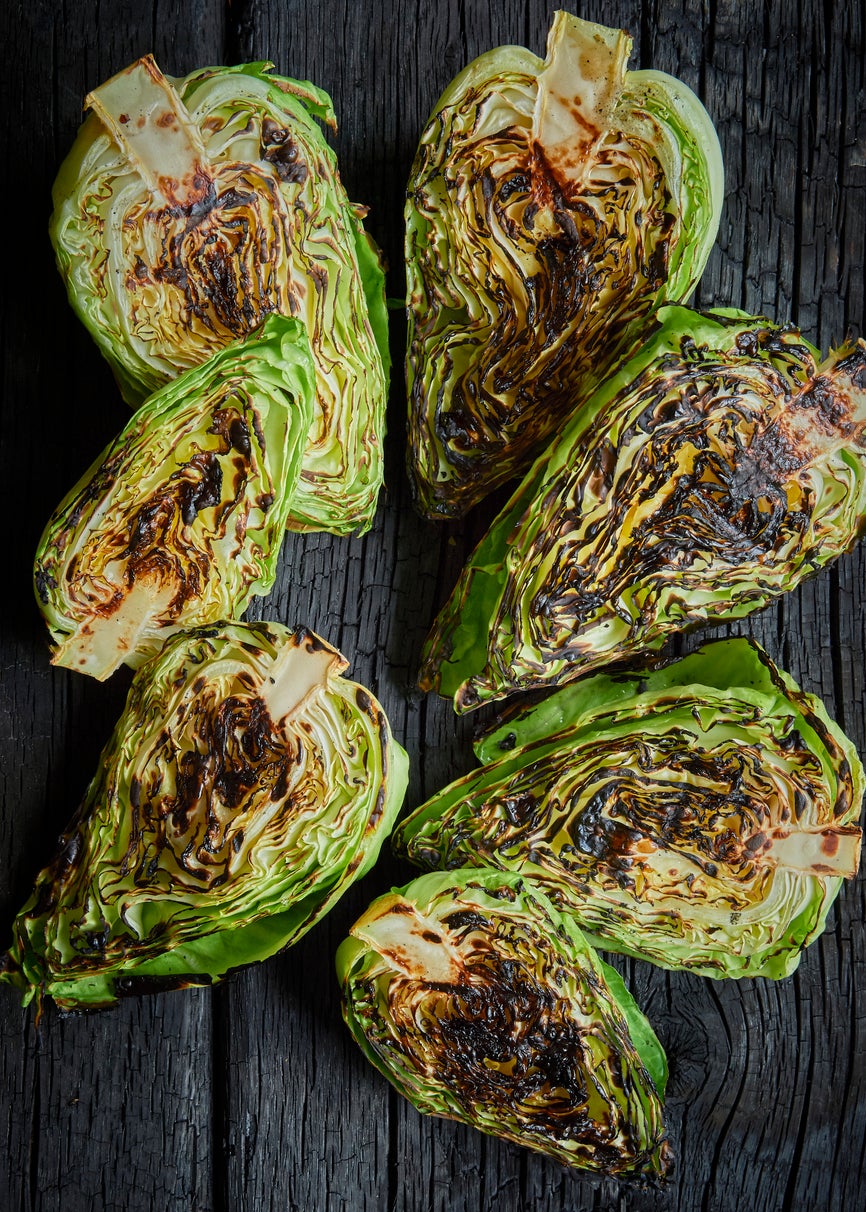
The key is technique. “Cut into wedges and confit in a pan to add colour to the leaves, then gently cook through in the oven until caramelised. The leaves should be translucent and sweet. Pair with umami-rich fats such as brown butter or miso butter.”
This is cabbage reimagined not as boiled obligation but deeply savoury indulgence. Fermentation offers another route to transformation. James Cooper and Nat Preston of Shedletskys built an entire business on it. “Shedletskys really started with kimchi,” they explain. “It’s not uncommon for us to ferment batches for a month before we’re happy with it.” Their home-friendly adaptation, below, acknowledges modern impatience while preserving flavour logic.
What emerges across these perspectives is a consistent theme: cabbage rewards care. Roast it, braise it, grill it, ferment it – each method reveals a different personality. Sweetness, bitterness, richness, funk.
Perhaps cabbage’s greatest strength is precisely its lack of glamour. It is inexpensive, widely available and stubbornly seasonal. It asks little, delivers much and carries none of the aspirational baggage of trendier ingredients.
Cabbage is not new. It is just newly appreciated.
Not magic. Just very, very good.
Confit January King cabbage
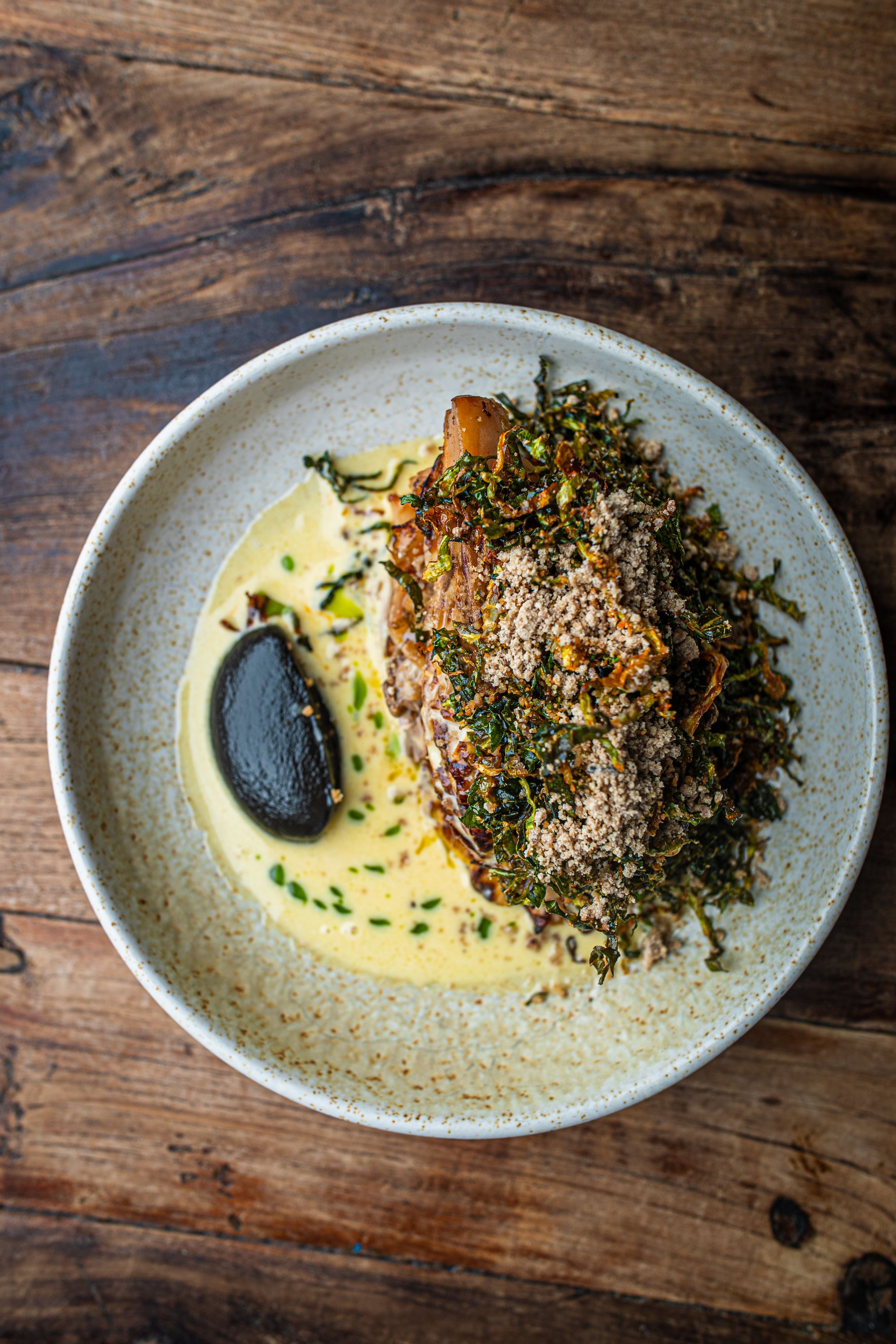
Serves: 4-6
Ingredients:
For the confit cabbage:
2 heads January King cabbage (small, dense cabbages work best)
600g unsalted butter
180g water
12g salt
10g pickled walnuts
12g kombu seasoning (below)
10 cooked chestnuts
5 bulbs of slow-roasted garlic
125ml water
15g miso
60g black garlic
5ml lemon juice
5ml red wine vinegar
For the kombu seasoning (mix well):
52g (1 packet) salted kombu (you can find online easily)
25g Old Bay seasoning
8g smoked paprika
6g smoked chilli flakes
25g Maldon salt
For the butter emulsion:
200g unsalted butter, diced into 2cm cubes
1 bulb of roasted garlic
80g water
Method:
1. Preheat the oven to 140C fan
2. Remove the outer leaves of the cabbage, chiffonade and reserve for the garnish.
3. Cut the heads in half through the root and lay flat side down in a deep baking tray.
4. Melt the butter and add the water and salt. Pour over the cabbage and cover the tray in tin foil or a lid.
5. Cook the cabbage for 1 hour and 30 minutes, and then check the cabbage, “cook it as you hate it” – it needs to be super soft so that the natural sugars begin to caramelise. You need to be able to run a knife through the core.
6. Remove the cabbage to a cooling rack to cool down and drain off excess butter.
7. Heat oil in a large deep pan to 170C and gently add in the shredded outer leaves. Stir gently and remove once crispy.
8. Drain onto paper towel lined plate and season with salt and kombu seasoning.
For the butter emulsion:
9. Cut the butter into 1cm cubes.
10. Place the water into a small pan and on a low heat, gently heat.
11. Gradually add the butter, whisking to emulsify.
12. Once all of the butter is fully melted and emulsified, blitz with a hand-held blender to fully incorporate. Season with salt and roasted garlic to taste.
13. The emulsion is ready to use
For the black garlic puree:
14. Place the miso, water and black garlic together in a medium pan and cook gently on the stove to soften the black garlic.
15. Simmer for 10 minutes, then add the slow-roasted garlic and heat through
16. Blend the puree until smooth in the blender, add the acid and adjust the seasoning to your taste.
To serve:
17. Portion the confit cabbage into quarters or halves (dependent on size).
18. Roast each side in a medium heat pan until nice and golden.
19. Glaze cabbage with the butter emulsion and season with salt and freshly milled back pepper.
20. Cover with pickled walnuts (you can buy them pickled or pickle them at home)
21. Top with crispy cabbage.
22. Place a dollop of the puree on the side, finish by grating chestnuts over the top and serve the garlic butter emulsion tableside.
Recipe from Fallow
‘Don’t call it kimchi’ lacto-fermented Chinese leaf cabbage
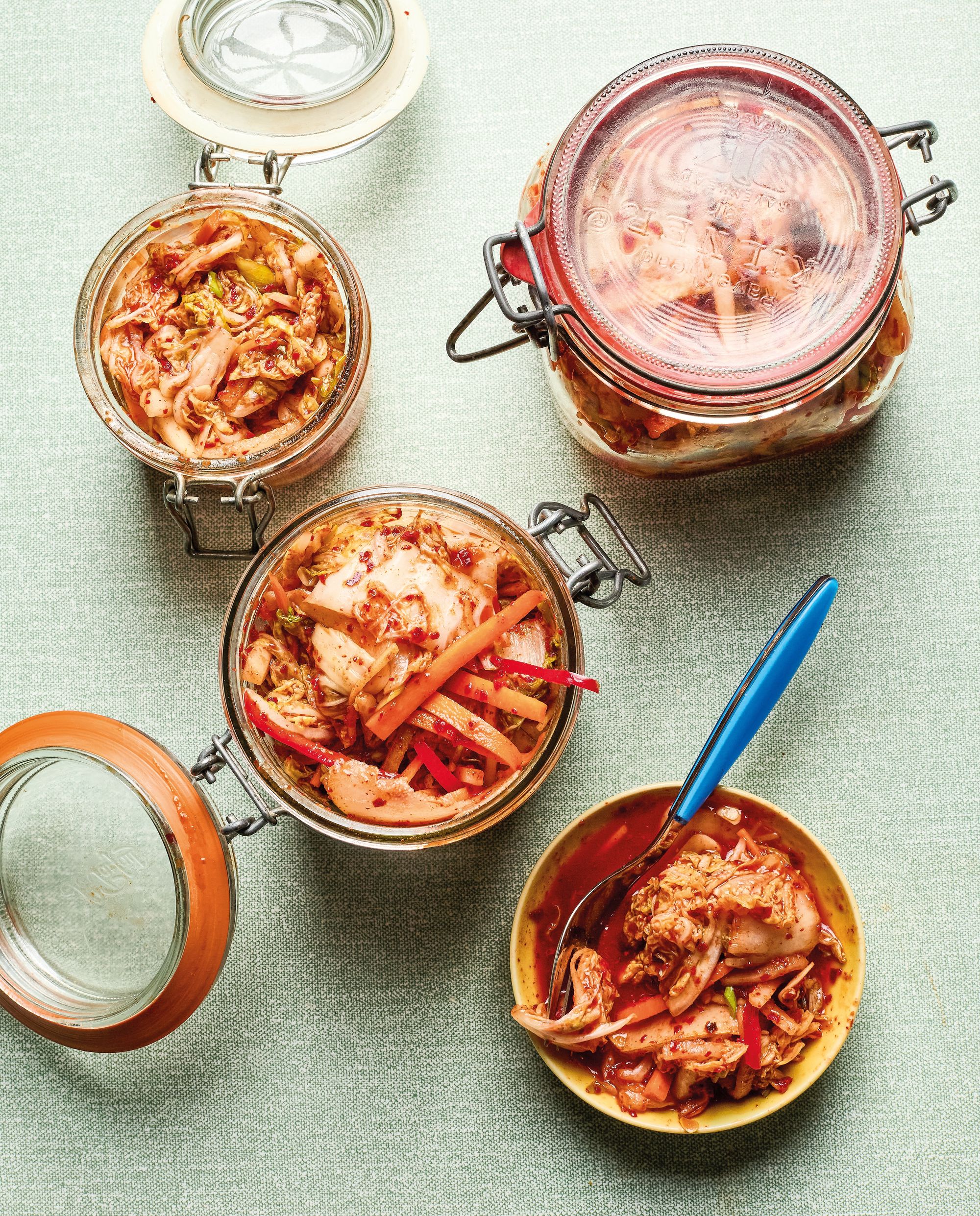
“Shedletskys really started with kimchi. We hosted a dinner party in our tiny Dalston flat in 2012, where we cooked a feast. As part of the meal, we made our own kimchi. And that, as they say, was that. We started hosting regular pop-ups and refined and adapted our recipe for making kimchi over the next few years. Today at Shedletskys, we make thousands of jars a month and have won awards for our interpretation. This isn’t that recipe, though.
“Shedletskys’ kimchi is naturally fermented and deliberately simple in terms of flavourings. We want to let the tang and funk develop on its own, so it’s a slow process. It’s not uncommon for us to ferment batches for a month before we’re happy with it.
“So for the home cook, we’ve changed things up a bit. We still salt the cabbage to start things off, but the paste that flavours the kimchi uses vinegar, so this is much closer to a pickle than a traditional fermented kimchi. It means it’s ready to eat in just a couple of days and has a recognisably kimchi-y flavour profile, although it would probably upset traditionalists and gets a bit slimy and unpleasant if stored for more than a couple of weeks.”
Makes: 1 large jar
Ingredients:
1 Chinese leaf cabbage (about 650 g sliced into quarters, then into 3-cm/1¼-inch slices)
20g salt (approximate amount – see recipe)
1 large carrot, peeled and sliced into 5cm/2 inch matchsticks
150g daikon (or any radish you have on hand), peeled and sliced into 5cm/2 inch matchsticks
1 conference pear, peeled, quartered and cored, then cut into 2-3mm/⅛ inch slices
1 red chilli, halved, deseeded and thinly sliced
3 spring onions, thinly sliced
Thumb-sized piece of fresh ginger, peeled and thinly sliced
4 garlic cloves, peeled and thinly sliced
50g Korean gochugaru chilli flakes
50g white sugar
6 tbsp fish sauce
4 tbsp rice vinegar
Method:
1. Weigh the sliced cabbage, then add it to a large bowl.
2. For the amount of salt, calculate 3 per cent of the weight of the cabbage and add that amount of salt to the bowl. Massage the cabbage gently until it starts to release some water. At this point, cover the bowl and set aside for at least 4 hours or ideally overnight. Once the cabbage has been salted, rinse well in cold water, then drain. Return the cabbage to the bowl.
3. Add the carrot, daikon, pear, chilli and spring onions to the cabbage bowl. Give everything a final mix and let it sit while you make the brine paste.
4. Add the ginger and garlic to a clean bowl. Add the gochugaru flakes, sugar, fish sauce and rice wine vinegar. Stir them together until a paste forms. If it’s too thick, add a scant teaspoon of water. You’re looking for something that’s the consistency of double cream.
5. Scrape the paste into the cabbage mixture and stir until everything is very well combined. You want to make sure all the vegetables are completely coated in the paste. Using your hands to massage everything together is messy, but the best approach.
6. Press the kimchi mixture into a large sterilised jar and weigh down the vegetables with a fermentation weight or water-filled, sealable plastic sandwich bag. Set aside for 24 hours. In that time, more liquid will leech from the vegetables. After 24 hours, stir once again and store in the fridge. Wait 24 more hours before consuming and use within a couple of weeks.
Recipe from ‘Tickle Your Pickle with Shedletsky’s’ by James Cooper and Natalie Preston (Ryland Peters & Small, £16.99)
Tim Spector’s simple sauerkraut
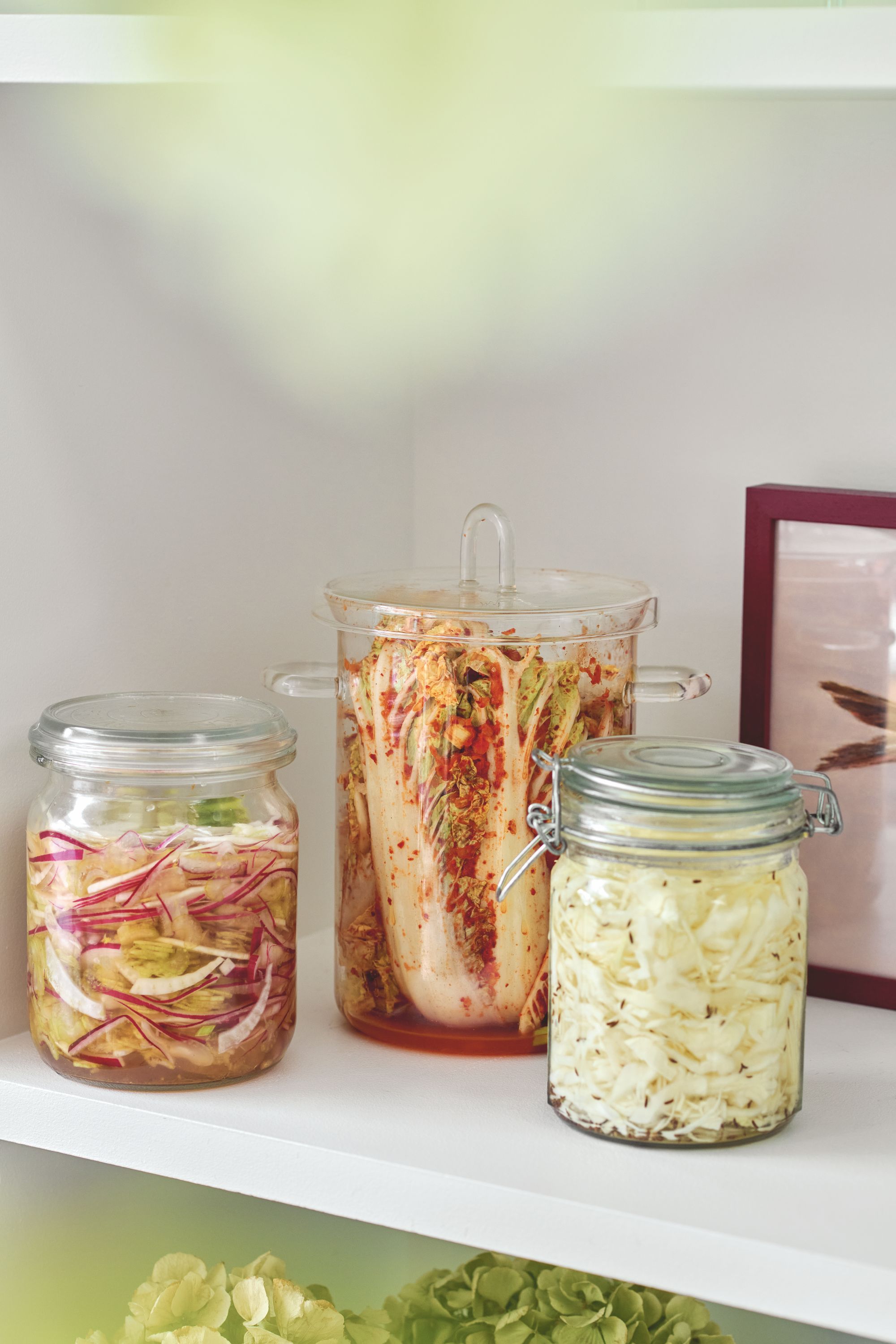
“Traditionally, sauerkraut is fermented slowly at lowish temperatures – two to four weeks at around 15-20C – to give enough time for the sourness to properly develop,” explains scientist and gut health expert Tim Spector. “With a pH of 3.5, sauerkraut is around seven times more sour than kimchi, its spicier cousin. Red cabbage takes longer to ferment than white cabbage, and both work faster if you add another vegetable (like a small carrot or two) that contains a range of accessible sugars for the microbes.”
Makes: 1 large jar
Ingredients:
1 white or red cabbage
1-2 carrots (optional)
1 tbsp caraway seeds (or juniper berries)
Sea salt
Method:
1. Trim the base of the cabbage and peel away the outer leaves; set these aside for use later. Cut the cabbage into quarters and use a mandoline, food processor, coarse grater or sharp knife to finely shred the cabbage and carrot (if using).
2. Tip the cabbage into a large bowl, add the caraway seeds and make a note of the total weight. Add 2 per cent salt of this total weight, so if the total weight is 600g, you will need 12g salt.
3. Using your hands, massage the salt really well into the shredded cabbage for a couple of minutes until it starts to soften. Cover the bowl with a clean cloth or plate and set aside for at least 30 minutes and up to three hours until the cabbage is very soft and has released water.
4. Scoop the cabbage and any resulting liquid into a clean one-to-two-litre jar and really pack it down hard so that the shredded cabbage is submerged under the briny liquid and you have a clear 5cm gap between the cabbage and the top of the jar. Cover the top of the cabbage with the reserved outer leaves and place a weight on top. Close the lid but leave it slightly loose – if the jar is sealed tight, it runs the risk of exploding!
5. Place the jar on a plate in a dark, cool cupboard out of direct sunlight and leave for two to three days for fermentation to start. Burp the jar daily to release any collected gas. After seven days, the sauerkraut should be fermenting nicely, so it can now be stored in the fridge. Use within one to two months, depending on how soft you like it.
Recipe from ‘Ferment: The Life-Changing Power of Microbes’ by Tim Spector (Jonathan Cape, £25)
Cabbage rolls
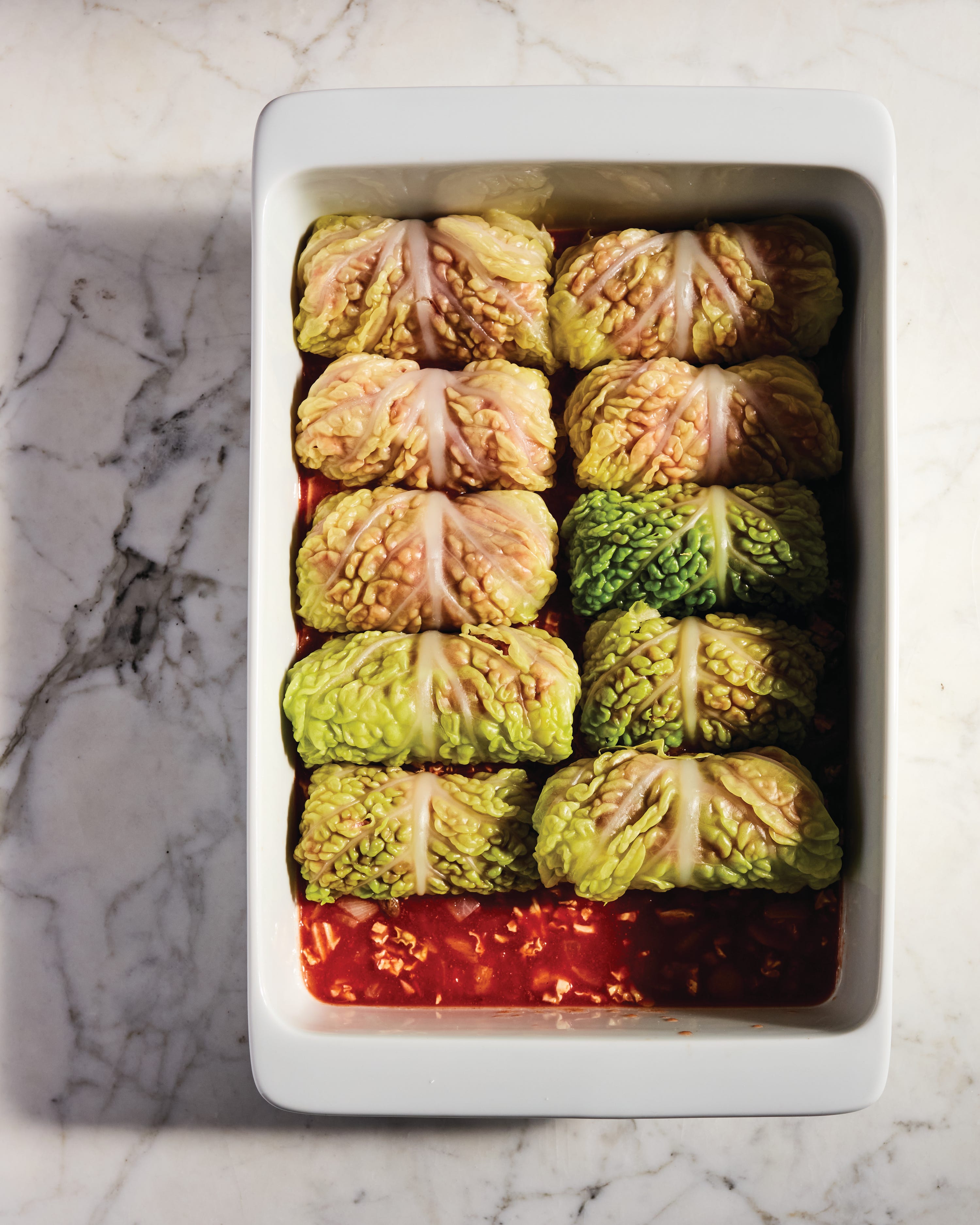
According to songwriter-turned-cookbook writer Benny Blanco, this is the perfect recipe to “make ahead of time and freeze”. He says: “I make 50 at a time, reheat them later, and give them a new home in my stomach.”
Serves: 6-8
Ingredients:
1 large or 2 medium heads of green cabbage, about 3lbs
2 onions, chopped
6 cloves garlic, chopped
2 tbsp unsalted butter
Kosher salt and freshly ground black pepper
2lbs ground beef (80% fat)
¾ cup uncooked white rice
2 eggs
1 can crushed tomatoes
1 cup water
½ cup chopped golden raisins
1 cup granulated sugar, plus 1 tbsp for baking
½ cup ketchup
3 lemons, juiced
1 orange, juiced
½ cup sauerkraut
½ cup white wine vinegar
½ tbsp cinnamon
Method:
1. Remove the core from the cabbage and separate into leaves. Blanch a few at a time in salted boiling water until pliable, one to two minutes per batch. When cool enough to handle, use a knife to remove the ribs. Chop one cup of cabbage and reserve it for later.
2. Cook onions and garlic in two tablespoons butter and a large pinch of salt over medium heat, stirring occasionally, until softened, about 10 minutes.
3. Combine beef, rice, eggs, and half the sauteed onion mixture. Season with one tablespoon of salt and some fresh pepper.
Add a little handful of the mixture to each cabbage leaf and carefully roll it like a little burrito, folding up the sides to create a little package.
4. To make the sauce, combine the remaining onion mixture, crushed tomatoes, water, raisins, sugar, ketchup, lemon juice, orange juice, chopped cabbage, sauerkraut, vinegar, and cinnamon. Season with salt and pepper.
5. Put a thin layer of the sauce at the bottom of a 9×13-inch pan. Tightly pack the cabbage rolls in the pan, and then add the remaining sauce. You want them to be swimming.
6. Sprinkle with one tablespoon of sugar.
7. Place a rimmed baking sheet lined with foil on the lower rack to catch any drips. Bake cabbage on the centre rack at 350F (177C) until the meat is falling apart and the rice is cooked, two to two-and-a-half hours. Tent with foil if getting too dark.
Recipe from ‘Open Wide: A Cookbook for Friends’ by Benny Blanco (Dey Street Books, £25)
Roast cabbage with tomato and lentil salad
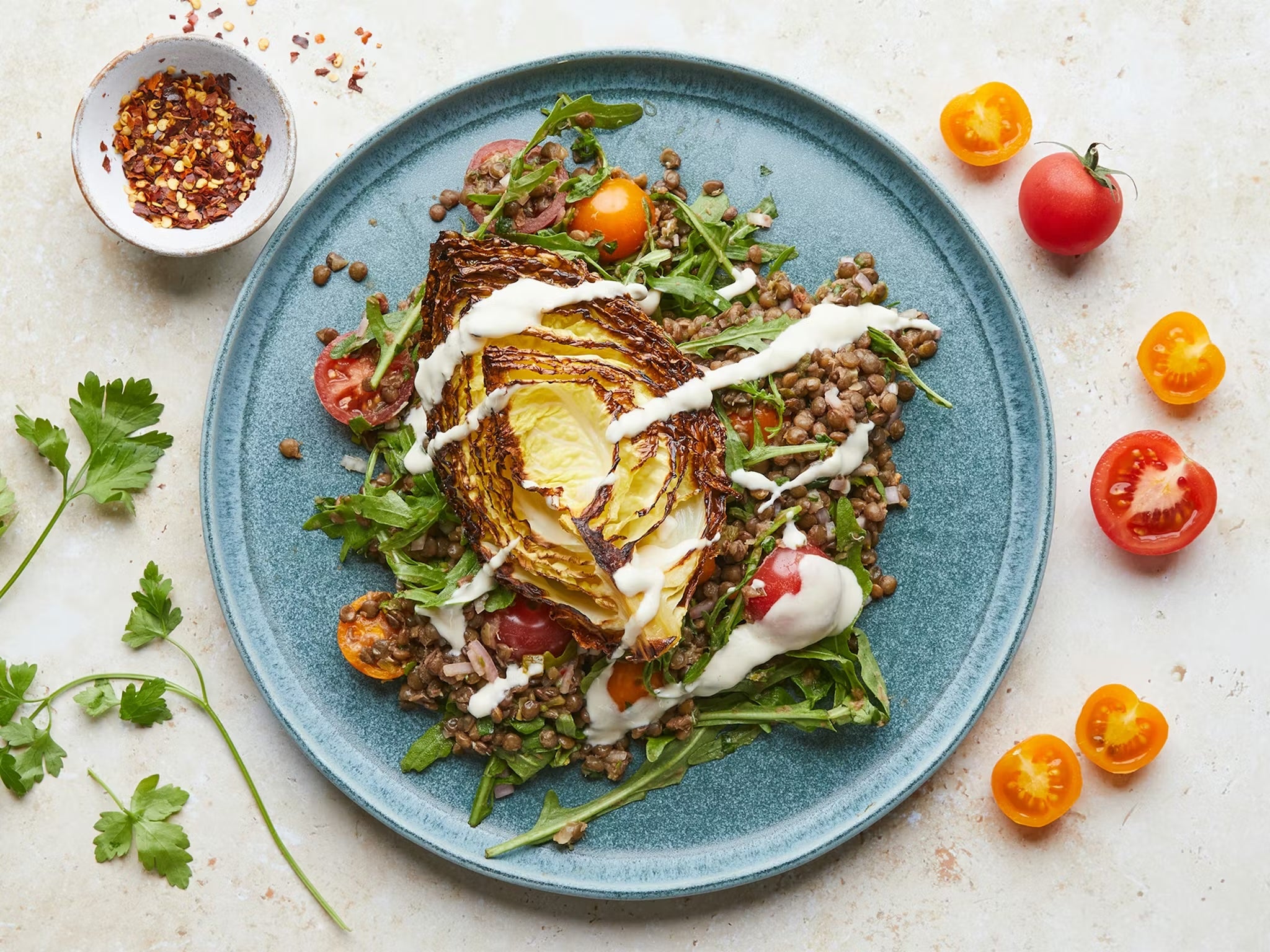
Here’s an easy summer salad with substance. Trusty old cabbage roasted in big wedges till golden and charred. Served on a bed of green lentils, heritage cherry tomatoes and rocket. Basted with a homemade zingy chimichurri sauce. Perfect to serve on any occasion. Who said cabbage was boring?
Serves: 1
Ingredients:
1 unwaxed lemon (use half)
1 savoy cabbage
20g rocket
1 handful of fresh flat-leaf parsley
80g almond yoghurt (use half) (Nuts)
1 chilli
½ tsp red chilli flakes
2 tsp tahini (sesame)
10g capers
90g heritage cherry tomatoes
1 garlic clove
1 shallot
80g green lentils
Method:
1. Preheat the oven to 220C/fan 200C/gas mark 7. Boil a kettle. Heat a large saucepan filled with salted boiling water on a high heat. Add the lentils and boil for 20-25 mins, until cooked, then drain.
2. Halve the cabbage lengthways. Place onto a lined baking tray and drizzle with 1 tsp oil and season generously with sea salt. Roast for 15-20 mins, until soft and golden brown.
3. Meanwhile, make the chimichurri dressing. Finely dice the shallot and half the chilli (remove the seeds for less heat). Finely chop or crush the garlic. Zest and quarter the lemon. Roughly chop the parsley and capers. In a small bowl, combine shallot, diced chilli and chilli flakes (to taste), garlic, lemon zest, parsley, and capers. Season with juice from 1 lemon wedge, 2 tsp oil and a pinch of sea salt and black pepper.
4. Halve the tomatoes and place them into a bowl with a pinch of salt. Set aside. Make the tahini dressing; in a small bowl, combine tahini, half the yoghurt, juice from 1 lemon wedge and a pinch of sea salt. Mix until smooth.
5. Once drained, return the lentils to the saucepan and mix in the chimichurri dressing. Gently mix in the tomatoes and rocket, and serve onto a plate with the cabbage on top. Drizzle over the tahini dressing.
Recipe from Mindful Chef
Roasted cabbage steaks with apple-Dijon vinaigrette
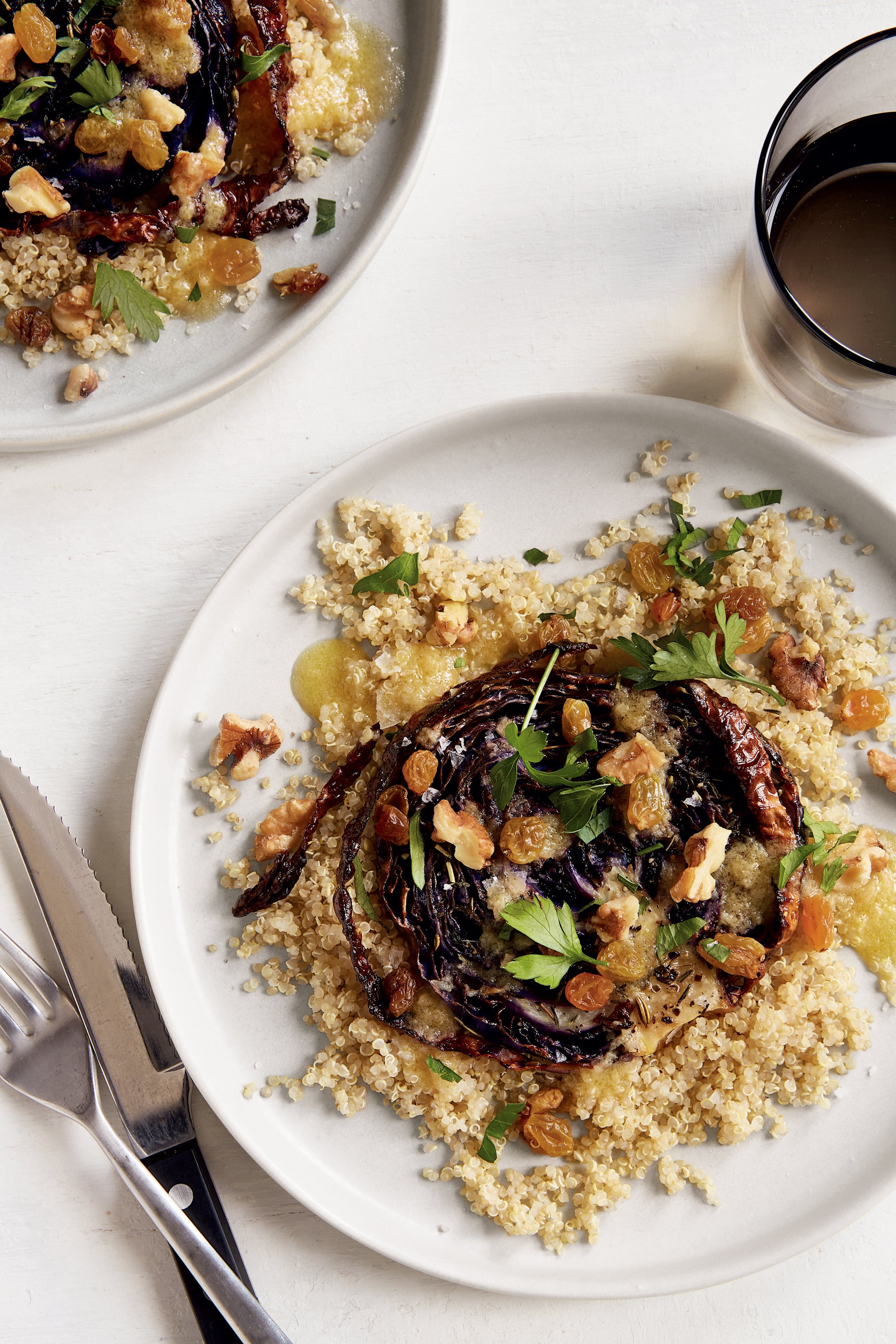
Go meat-free with thick slices of cabbage topped with tangy mustard dressing.
“Cabbage is having a moment, which means that by default, Poland is too, because the cold climate crucifer is basically our national food,” says Queer Eye’s Antoni Porowski, who was born in Canada to Polish parents.
“Cutting it into slabs and roasting it gives it crisp, caramelised edges and a tender bite. Using apple sauce in the vinaigrette is a new trick for a classic store-cupboard staple; its tart, fruity notes bring a sweet brightness to the dish.”
Sveres: 4
Ingredients:
For the cabbage steaks:
1 medium red cabbage, trimmed
60ml extra-virgin olive oil
½ tsp dried herbes de Provence, thyme or oregano
Kosher salt and freshly ground black pepper
55g walnut pieces
170g quinoa, rinsed and drained
1 bay leaf
For the vinaigrette:
3 tbsp apple sauce
1 tbsp apple cider vinegar
1 tsp Dijon mustard
1 tsp honey
¼ tsp kosher salt
⅛ tsp freshly ground black pepper
75ml extra-virgin olive oil
3 tbsp raisins, chopped dried apricots, dried cherries or chopped dates
30g fresh flat-leaf parsley, roughly chopped
Flaky sea salt, such as Maldon (optional)
115g soft goat’s cheese for serving (optional)
Method:
1. Heat the oven to 220C/425F/gas 7. Line a baking sheet with baking parchment.
2. Cut about 1cm (1/2 inch) from one long side of the cabbage to create a flat edge (so it won’t roll) and place the cut side down on the chopping board. Cut four 1cm-thick lengthways slices from the middle of the cabbage outwards (to get the largest pieces) to make cabbage “steaks (reserve the rest of the cabbage for another use). Arrange the steaks on the prepared baking sheet with the core ends towards the corners of the sheet so they get the most heat. Brush with the oil. Season with the dried herbs, half a teaspoon of salt and a quarter teaspoon of pepper.
3. Cover the sheet tightly with foil and roast for 25 minutes. Uncover and continue roasting until the cabbage steaks are golden and tender, 25-30 minutes more.
4. Meanwhile, spread the nuts on a small baking sheet and bake until fragrant, seven to nine minutes. Transfer to a plate and let cool, then roughly chop.
5. To cook the quinoa, bring 500ml of water to the boil in a medium saucepan. Add the quinoa along with the bay leaf, reduce the heat to low, cover and simmer until tender, about 10 minutes. Drain any excess water. Remove and discard the bay leaf. Season the quinoa to taste with salt and pepper and set aside.
6. Whisk together the apple sauce, vinegar, Dijon, honey, salt and pepper in a small bowl. Whisk in the oil.
7. When the cabbage is ready, sprinkle the dried fruit over the top, return the pan to the oven, and cook for about five minutes more to plump the fruit a little.
8. Spoon the quinoa onto plates, spreading it out a bit. Arrange the cabbage steaks on top. Drizzle with the vinaigrette. Top with nuts, parsley and, if desired, flaky salt to taste, and then the cheese, if using.
Recipe from ‘Let’s Do Dinner’ by Antoni Porowski (Bluebird, £22)
Korean chorizo and sesame roast cabbage jjigae with rice
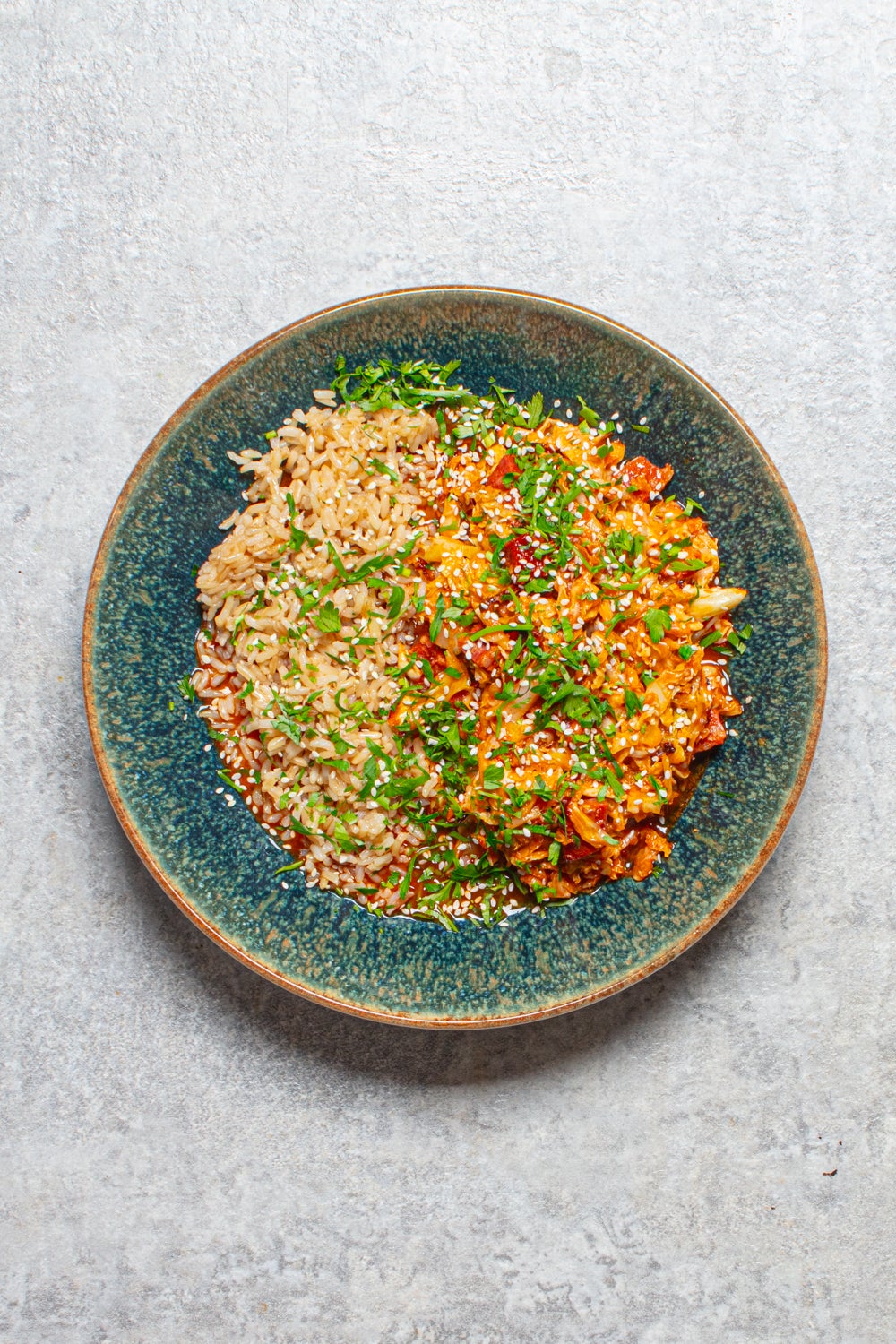
If you can’t get your hands on chorizo, try making this recipe with pancetta instead.
Ingredients:
1 small savoy cabbage
175g chorizo
4 cloves garlic
30g fresh ginger
3 tbsp gochujang
3 tbsp sesame oil
15g fresh parsley
250g microwave brown rice
20g unsalted butter
2 tbsp fish sauce
1 tbsp sesame seeds
Method:
1. Preheat the oven to 200C. Fill the kettle with water and put it on to boil – this will be for the stew later.
2. Thinly shred 1 small savoy cabbage, then cut 175g of chorizo into bite-sized chunks. Add them to a large roasting tray.
3. Finely grate in 4 cloves of garlic and 30g of ginger. Add 3 tbsp of gochujang, 3 tbsp of sesame oil, and a generous pinch of salt.
4. Give everything a good mix in the tray and spread it out to form an even layer.
5. Roast for 20-25 minutes, until the cabbage wilts and chars in places. Get on with the rest of the dish in the next steps while you wait.
6. Finely chop 15g of parsley and add it to a large mixing bowl.
7. Crumble one 250g pouch of cooked rice into the bowl, then add 20g of butter and a pinch of salt. Give everything a quick mix. We will cook this in the microwave later.
8. Once the cabbage is ready, add 2 tbsp of fish sauce and 300ml of boiling water from the kettle, and give everything a good mix.
9. Return the tray to the oven and roast for a further 5-6 minutes, until the liquid starts to boil and thicken slightly. Get on with the rest of the dish in the next steps while you wait.
10. Cover the bowl of rice with clingfilm, then microwave on full power for 4-5 minutes, until piping hot. Crack on with a bit of washing up while you wait.
11. Divide the rice between shallow bowls, then spoon in the stew. Scatter over the parsley, top with 1 tbsp of sesame seeds, and serve.
Recipe from Sorted Food