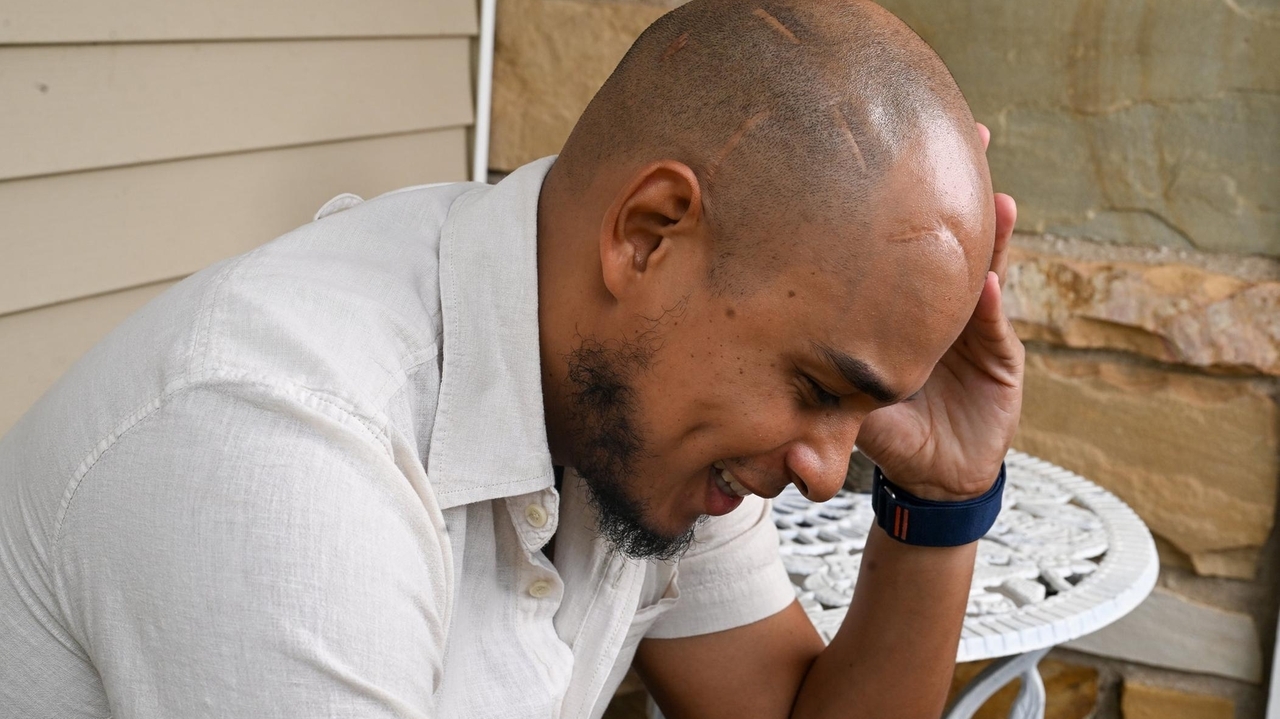
Jonathan Guerrero was 23, spending freely on cars, travel and dinners out while working as a fitness trainer and attending nursing school. Johnny Nahas was 27, saving for an engagement ring after signing a lease on a Glen Cove apartment with his girlfriend..
Cancer, and the financial crisis that can come with it, could not have been further from their minds.
Guerrero, of Coram, was diagnosed in 2016 with diffuse large B-cell lymphoma that spread to his brain and lungs. Nahas learned in 2023 he had a 2.8-centimeter medulloblastoma, a treatable form of brain cancer. Although both are now cancer-free, they accumulated medical debt on top of their other bills while unable to work during their treatment and recovery.
“Just being diagnosed with any type of cancer is going to take a toll,” said Guerrero, now 33 and a patient navigator at an area hospital helping patients with financial issues. “But even if you’re a cancer survivor, you can be over $100 grand in debt.”
“Just being diagnosed with any type of cancer is going to take a toll. But even if you’re a cancer survivor, you can be over $100 grand in debt.”
— Jonathan Guerrero, of Coram, who was diagnosed at 23
Even after treatment ends, many young adults find the financial damage lingers.
Guerrero and Nahas are among the more than 2.1 million adolescent and young adult cancer survivors, also known as the AYA group, which the National Cancer Institute classifies as ages 15 to 39. More than half experience severe “financial toxicity,” struggling to afford food, housing and basic medical necessities long after active treatment has concluded, a 2024 report in the journal JCO Oncology Practice stated.
This group faces an average economic cost of $259,324 per person over their lifetime, according to a 2023 report from The American Society of Clinical Oncology.
“Financial toxicity is where they get this unexpected diagnosis of cancer and now they have to worry about the financial aspect of it,” said Kristen Rodrigues, lead financial navigator at the Stony Brook Cancer Center. “So not only are they dealing with the mental load of ‘I might die.’ Now you’re dealing with the financial, ‘Can I afford my treatment?’ “
Family strains
Sometimes the financial strain can impact a patient’s family too. And the problem is worsened on Long Island where the cost of living is 32% higher than the national average, according to Manhattan-based Moody’s Analytics.
Guerrero said his treatments reached more than $80,000 in out-of-pocket costs. When he came through the treatments at age 24 and “was looking to start my life over,” he chose to declare Chapter 7 bankruptcy.

Jonathan Guerrero’s mother, Floris, goes through old papers from his treatment at her Coram home. She says it took everything the family had to save him. Credit: Elizabeth Sagarin
He was unable to work for a year while he was going through chemo every two weeks for seven months and then a stem cell transplant, he said. “Most families are not in a position to be paying all these bills,” he said. “At first my sisters and parents struggled to make my car and credit card payments so my credit wouldn’t be damaged, but they couldn’t keep up. And then the medical bills came in … the costs accumulated to almost $80,000.”
He said he has since repaired his credit and now “dreams of buying my own house.”
He said that he went from the “lowest point in my life, when I was not able to speak, eat or walk” to attending St. John’s University and earning a degree in healthcare and human services in 2019.
Peak earning years
The AYA group faces numerous financial pressures at a time when they are making career- and relationship-building decisions, said Emily Long Sarro, an adolescent and young adult nurse practitioner at the Lisa and Scott Stuart Center for Adolescent and Young Adult Cancers at Memorial Sloan Kettering Cancer Center, which has locations in Uniondale, Hauppauge and Commack.
“If they’re fortunate enough to have employer-based insurance, that’s tied to their job, so if they need to take time off or have to quit to be able to receive their cancer care, then that means their health insurance is in jeopardy,” Sarro said. She added that when patients turn 26 they are no longer eligible to be on their parents’ insurance.
Meanwhile, while going through treatment, young adults often lose income during their peak earning years, said Nicole Fortoso, patient and community outreach manager for Blood Cancer United for Metro New York and Long Island (formerly known as the Leukemia & Lymphoma Society).
“Many have limited paid leave, or they may be earlier in their careers so may be working hourly jobs or be self-employed,” Fortoso said. “A lot of them are still in school, like graduate school. And there’s rent, mortgages, utilities, everyday bills that continue to come. Sometimes folks need to move closer to treatment or temporarily relocate, so there are expenses there as well.”
Young adults also face expenses older patients do not, like fertility preservation. Egg storage alone can cost more than $1,000 per year, Sarro said.
Johnny Nahas recovering in the hospital following his surgery. Credit: Johnny Nahas
31 rounds of radiation, 4 rounds of chemo
Following surgery, Nahas said he couldn’t work as he underwent 31 rounds of radiation and four rounds of chemotherapy. In addition to draining his “rainy day fund,” he said his parents have continued to help with medical bills.
“Even though I had insurance through the company, it was a very expensive treatment plan,” said Nahas, 29, who works with his father at Nahas Flooring in Old Bethpage. His surgery alone topped $450,000 before insurance. Radiation treatments were billed at about $11,000 each and chemotherapy roughly $20,000 per session.
His partner, Natalie Terrone, 27, an elementary school reading specialist who was in her first year of teaching when Nahas was diagnosed, said, “Everything was on pause. We were worrying about our future, Johnny’s health and our financial situation. Cancer is not something you ever think you would deal with at this age.”
Nahas is now engaged to Terrone and planning an August 2027 wedding.

Nahas is selling T-shirts to raise money to pay back the foundations that helped pay his rent while he was recovering. Credit: Newsday/Alejandra Villa Loarca
There is help
Sarro said there are also funds and grants patients can apply to, for as little as $100 up to $10,000. “Patients will say they’ll take anything, and I’ve had a lot that start GoFundMe pages as well, trying to crowdsource from friends and family.”
Fortoso said that Blood Cancer United has an urgent-needs program that can provide $500 “to relieve any immediate financial hardship related to their diagnosis.” They also have a copay assistance program that can cover up to $2,500 a year.
Nahas said his mother helped him to apply for grants from three separate foundations: Brian’s Foundation of Hope, the 76 Foundation and Expect Miracles Foundation. He received grants totaling just over $16,600 that were sent directly to his building manager, covering about five months’ rent.
He has been selling T-shirts to raise cancer awareness and pay back the foundations that helped him while he was recovering, though they don’t require that. “I want people in my position to know that those foundations are out there,” he said. “You just have to do the research and reach out.”
Increased recognition of needs
Sarro said there has been an increasing recognition among the cancer medical community about the unique needs of young adults. “More hospitals are developing dedicated adolescent and young adult programs because it’s now recognized that the needs at the life stage are so different than older adults being diagnosed with cancer,” said Sarro, one of the founding members of MSK’s AYA program.
Most major hospitals offer a financial aid program, Rodrigues said.
“Pretty much any patient that gets referred [by medical staff] to us for the most part qualifies for financial aid because they’re having some type of financial difficulties,” she said.
Jonathan, pictured with mom Floris, was 23 when he was diagnosed with diffuse large B-cell lymphoma (DLBCL) with concentrations in the brain and lungs in 2016. Credit: Jonathan Guerrero
Nahas noted Sloan Kettering’s AYA program helped him with the mounting co-pays.
Nonprofit cancer organizations, such as Blood Cancer United, can also help with debt management. Guerrero said he also received grants through Blood Cancer United to help with his copays.
There are other available programs, like the Nancy Marx Cancer Wellness Center at the Sid Jacobson Jewish Community Center in East Hills, which offers limited one-time financial support to cancer patients. The program can help clients with co-pays, paying for medication, rent and even basic necessities.
“There are some people that say medical bills are so overwhelming that they can’t afford food,” program manager Natalie Dukshtein said.
Steps to take
Rodrigues advises any young adult who is newly diagnosed to make sure their provider accepts their insurance.
Guerrero stressed the importance of speaking to the financial department of the hospital where you are being treated to ask if they have a sliding scale or can help renegotiate your debts and make payment plans.
“A lot of people feel like they’re the only ones this is happening to,” he said. “Some people don’t even ask because they just think they’re stuck with paying all these bills, and they don’t seek help.”
Resources
Most major hospitals offer a financial-aid program, patient advocates say, and they can also refer patients to groups that offer aid. In addition, advocates advise that newly diagnosed young people make sure their provider accepts their insurance. Below is a sampling of resources:
- Memorial Sloan Kettering Adolescent and Young Adult Program
Available for all MSK patients 15 to 39 years old with any diagnosis, across all MSK locations, including Long Island sites. Contact 833-926-4733 - Stony Brook Cancer Center
Stony Brook offers a financial-assistance program available to patients of all ages. Visit cancer.stonybrookmedicine.edu/your-visit/support-services or call for more information. - Blood Cancer United
Blood Cancer United offers medical debt case management and a co-pay assistance program for patients of all ages. Contact the Information Resource Center, 800-955-4572. bloodcancerunited.org - Nancy Marx Cancer Wellness Center
This center is part of the Sid Jacobson Jewish Community Center: Call or email Natalie Dukshtein, 516-484-1545, ext. 103; ndukshtein@sjjcc.org
Nahas said he received grants from the following organizations. He is selling T-shirts at nahasapparel.myshopify.com/pages/donate to pay the organizations back: